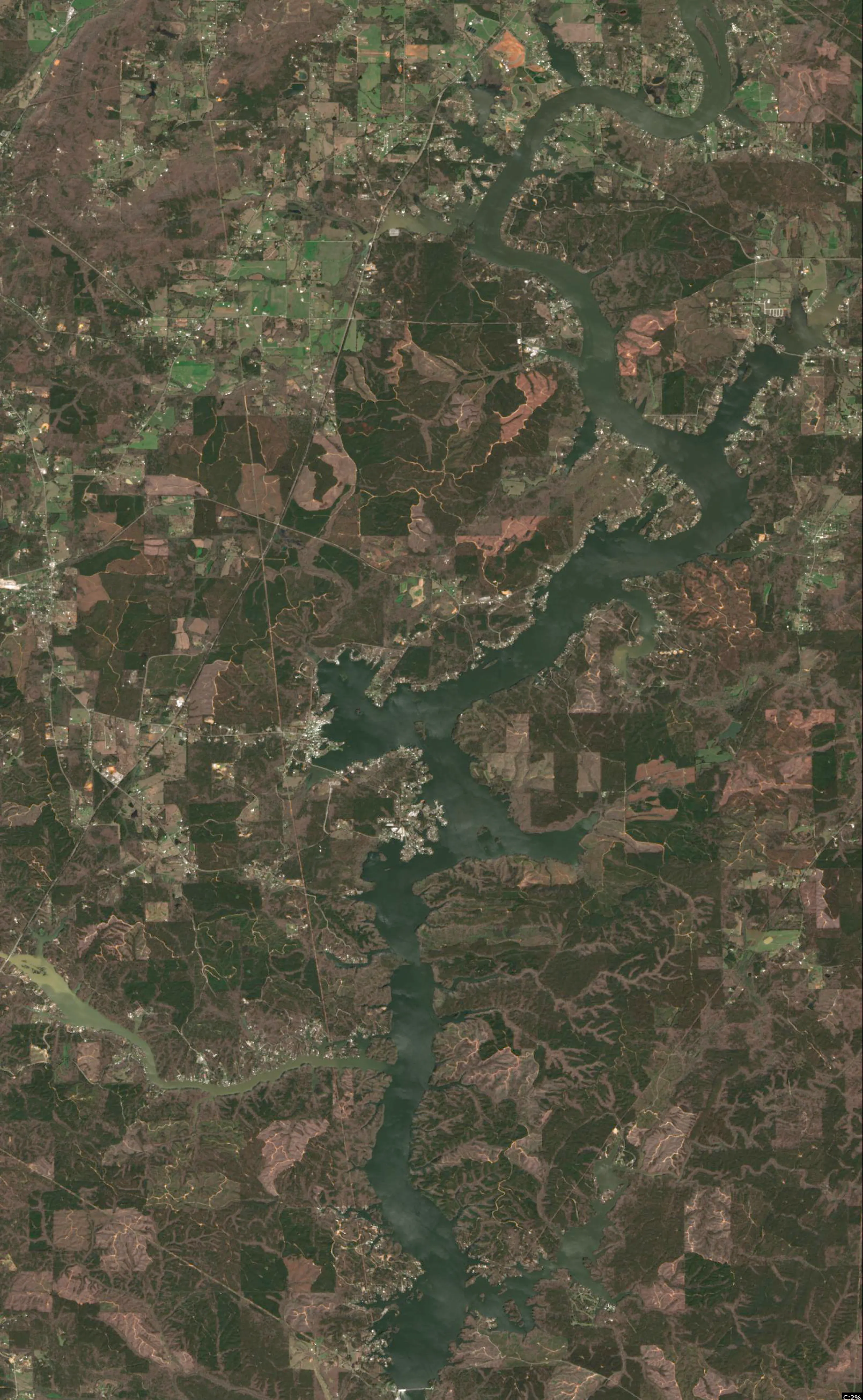
Lay Lake Fishing Report
Flip the finesse jig directly to blowdowns and the shade line, and slow your retrieve to a crawl—yesterday’s pressure rise will make these fish cheeky until the afternoon major window kicks in.
THE CALL: Fish the main-lake channel swing points at dawn with a bone topwater and a green pumpkin finesse jig, then slide to the first deep edge of the river channel in the afternoon with a plum worm.
WHY IT WINS:
- Temperature + Trend: 77°F water and a cooling trend push bass into their summer rhythm—early/low‑light movement, then retreat to stable deep structure.
- Clarity + Cover: High-visibility, low‑sediment water forces a finesse approach and makes shade edges, points, and the thermocline the highest‑percentage ambush positions.
- Timing: The afternoon major solunar (2:40–5:10 PM) and the morning minor window (6:36–8:06 AM) put the best feeding activity right on top of low‑light periods.
- Pressure: The slight pressure rise after yesterday’s thunderstorms says fish will be tight to cover, not roaming—hit specific targets with precise casts.
START HERE: At first light, run to the first large main‑lake point just upstream of the dam on the west shore. Look for the hard bend where the old river channel swings tight to the bank and the shoreline becomes steep. You’ll see a visible seam of dark blue water (the channel) pushing up against the lighter‑colored flat. Work the nose of the point first, then fan‑cast both sides.
THROW THIS:
- First move: A bone‑colored Super Spook or walking topwater. Walk it slow with a steady cadence over the point and along the channel seam. Let it sit for 5‑second pauses if a fish swirls.
- Backup bait: 3/8 oz green pumpkin finesse jig with a green pumpkin twin‑tail trailer. Pitch it to the same zone and let it sink on a semi‑slack line. Keep your thumb on the spool—you’ll feel the tick on the first fall.
- After 8 AM: Switch to a 6‑inch plum Texas‑rigged worm (1/4 oz weight) and move to the first channel ledge in 15‑20 feet of water. Drag it slowly, letting the worm pause for 4‑5 seconds between movements.
BEST WINDOW: Be on the point by 6:15 AM to settle in before the 6:36 AM minor feeding window fires. The bite will likely last until the sun flattens the water around 8:30 AM. The second high‑percentage window is the 2:40–4:15 PM major solunar—position tight to that deep channel swing again with the worm or a deep‑diving shad crankbait.
NEXT MOVE: If the point is dead after 45 minutes of working the jig and topwater, slide to the first steep bluff bank 200 yards south. Flip the finesse jig directly to blowdowns and the shade line, and slow your retrieve to a crawl—yesterday’s pressure rise will make these fish cheeky until the afternoon major window kicks in.