### THE CALL
The thermal imagery showed warm pockets, but a cold feeder creek could be a local oasis.
Fish the wind-blown points and creek-mouth transitions in the northern section of Lay Lake this evening with a 1/2 oz chatterbait or swim jig in white/chartreuse, focusing on the 74–76°F thermal edges where active bass are feeding during the minor solunar window from 6:54 to 8:24 PM.
THE CALL
Pattern: Evening reaction bite on thermal transition zones and clarity edges.
The cooling water trend (−3.6°F over 47 readings, now 78°F) has bass stressed but still willing to chase if you put the bait where the temperature breaks and the wind stirs up the turbidity line. The 74–76°F transition zones from the thermal imagery are the natural highways—bass hold in the cooler side and lunge into warmer pockets. Pair that with a moderate 8 mph wind from the west and a minor solunar window, and you get a short, aggressive evening window that’s your best shot at quality fish today.
WHY IT WINS
- Thermal edge hunting: The June 25 thermal imagery shows sharp gradients between 74–76°F cooler water and 85°F warm pockets. Predators patrol those seams, using the cooler water to regulate while ambushing bait in the warmer plumes.
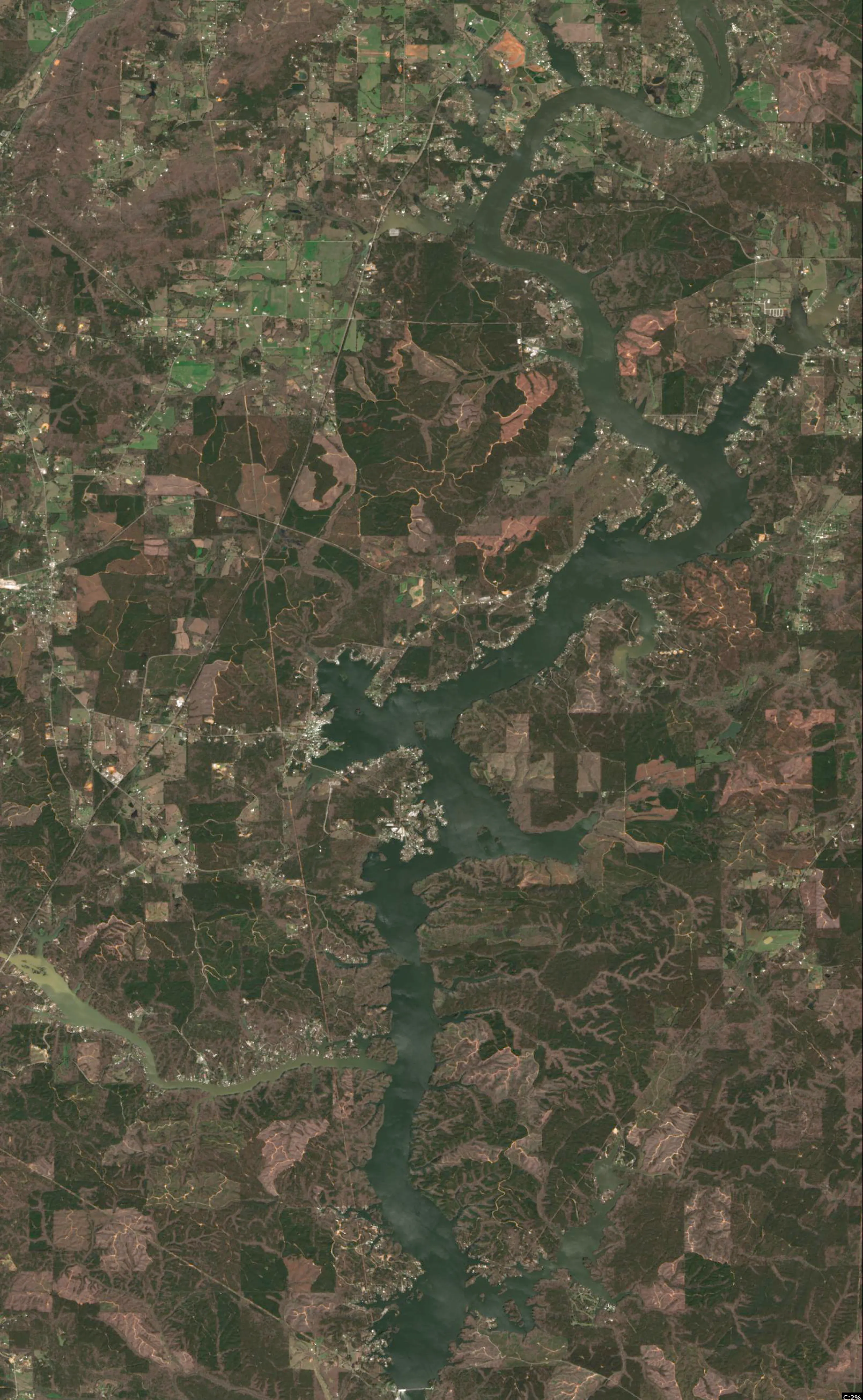
- Wind + clarity: 8 mph wind from 254° creates perfect reaction-bait lanes on wind-blown banks. Historical clarity analysis (March 20 imagery) shows a high-productivity, stained lake with distinct turbidity edges near inflows—fish use these transitions for cover while feeding in the cleaner gaps.
- Solunar timing: Minor feeding period from 6:54 to 8:24 PM local aligns with dropping light and manageable surface temps. The hourly conditions score a 75 for that window with ideal wind, and tomorrow’s rating jumps to a 5/5, confirming the moon phase (waxing gibbous) is building momentum.
- Species behavior: Both largemouth and spotted bass are at the top of their stress threshold at 78°F—they’ll feed aggressively in short windows but slide to deeper, more stable water as the sun climbs. Early evening is the time to catch them moving up.
START HERE
Northern section – westernmost visible arm where the narrow channel widens into the main basin.
Find this area by running north from the main lake until you see a distinct creek arm on your west side. The satellite imagery (June 26, limited by clouds) shows a bottleneck where a winding channel opens into a wider flat. That transition zone combines:
- A natural thermal gradient (shaded, slightly cooler water from the narrow arm mixing with the warmer main lake).
- Wind exposure on the west side, pushing bait and murky water into the cleaner main-lane edge.
- Stake out along the points and shoreline bends where the channel edge drops from 4–6 ft to 10–15 ft.
Backup area: If that zone is flat, run to the main lake body’s wind-blown points where the deep channel (dark blue signature) meets the lighter flats. Look for any visible color change or current break.
THROW THIS
Primary: 1/2 oz chatterbait or swim jig – white/chartreuse skirt with a matching swim trailer.
- Retrieve: Steady medium speed, keeping the blade or skirt thumping just below the surface. Vary with occasional pauses when you hit a visible transition between stained and cleaner water.
- Why: High vibration cuts through the suspended sediment, and the white/chartreuse contrast shows up in low-visibility water. The wind lets you cover water fast and trigger reaction strikes from fish holding on the thermal edge.
Backup: If fish follow but don’t eat, or if the bite slows after 30 minutes, switch to a Texas-rigged 10" magnum worm in green pumpkin purple (plum) – 1/4 oz bullet weight.
- Retrieve: Drag slowly along the bottom in 8–12 ft, pausing on any cover or depth change. Let the scent and bulk profile work in the stained water.
- Why: Cooling trend and stressed fish may need a slower, more contact-oriented presentation. The big worm gives them a mouthful without forcing a chase.
Secondary option for deep fish: If the evening window fails, come back tomorrow morning with a deep-diving crankbait (6XD, shad color) and work the 15–20 ft break on the main channel edges.
BEST WINDOW
This evening: 6:00 PM – 8:30 PM local time.
The sweet spot is the minor solunar peak from 6:54–8:24 PM. The sun will be low, the wind should hold around 8 mph, and surface temps will start to drop—bass will make a short move up onto those thermal edges to feed. Be on your first spot by 6:00 PM to catch the pre-window activity.
Tomorrow morning backup: 7:00–9:00 AM during the major solunar (12:36–3:06 PM? No – the hourly window shows 7–9 AM with a 75 score and major solunar overlap). That early window will be calmer (3–4 mph wind) but still productive if today’s evening bite is a wash.
NEXT MOVE
If the evening reaction bite is dead after 45 minutes of honest coverage (you have covered the wind-blown points and the creek-mouth transition with both the chatterbait and the worm), slide to the main lake deep channel edges and slow down.
- Run a football head jig (3/8 oz, green pumpkin/black) or the deep crankbait along the 15–20 ft break. The cooling trend (−3.6°F) may have already pushed some fish deeper, especially the bigger ones that are avoiding metabolic stress.
- Also check any visible shade lines from docks or overhanging trees on the north side of points—bass will tuck into that cover to escape the heat.
- If still nothing, relocate to the southern section (if accessible) where the narrow arms may have cooler inflow. The thermal imagery showed warm pockets, but a cold feeder creek could be a local oasis.