Wheeler Lake Fishing Report
The fish are likely holding tight to the bottom in the channel edge, not roaming the points.
THE CALL: Target deep structure and shade edges in the upper northern segment of Wheeler Lake with a deep-diving crankbait and a football jig from 11:45 AM to 2:15 PM, then slide to the main channel bends if the action slows.
WHY IT WINS
- Water is stable at 83°F with no temp movement (only 0.7°F change over 47 readings), so fish aren't chasing warming or cooling—they're holding on established structure and shade.
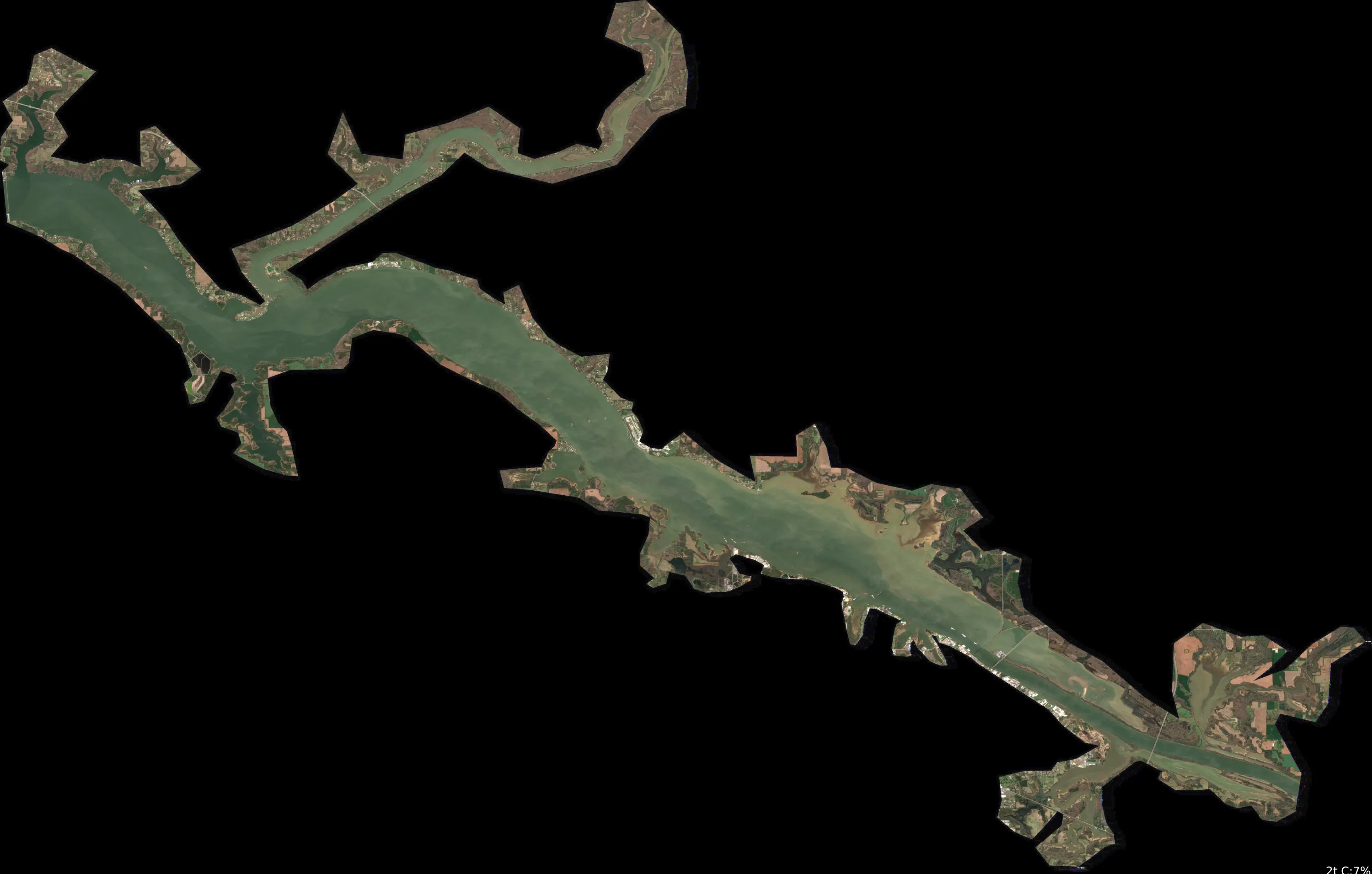
- The satellite imagery shows the northern upper segment has sharp points, deep dark coves, and color transitions from light shoreline to dark water—that's the structure-plus-depth combo that holds bass in 80-degree water.
- The clarity analysis confirms stained, nutrient-rich water in the northwestern inflows, which pushes baitfish and bass to the edges where cleaner water meets the green zone. That productivity seam is a feeding lane.
- Rising pressure (1015 mb) and calm wind (2-3 mph) mean fish are tightening to cover and shade. They won't chase far—you have to hit them in the face with the bait.
START HERE Launch into the largest northern/upper segment of the lake. Focus on the western shoreline where the bank juts out into sharp points, then falls into dark, deep coves. The transition zone where the light tan shoreline color meets the dark blue water is the target. These points provide a hard structure break, and the adjacent coves offer deep-water refuge and shade. Fish the wind-blown side of each point first—the light air movement will still push bait into those banks.
THROW THIS Primary: A deep-diving crankbait in shad pattern (6-10 feet dive range). Work it with a steady, medium-speed retrieve, bouncing it off the bottom and deflecting off any cover. The stained water in the northwestern zones means you need moderate vibration for the fish to track it.
Backup: If that fails to produce a reaction, switch to a 3/8-ounce football jig in green-pumpkin or black/blue. Drag it slow along the bottom, keeping contact. Use a steady, bottom-bumping retrieve with occasional pauses. Darker colors in the stained pockets, natural in the clearer edges.
BEST WINDOW Be on your first spot by 11:45 AM. The major solunar window runs from 11:45 AM to 2:15 PM, and the hourly forecast shows light 2-3 mph wind combined with that feeding period—this is the highest probability window of the day. The midday sun will push fish deeper into the shade and cover, so the crankbait covers water fast during the best part of the bite.
NEXT MOVE If the upper northern segment is dead after 45 minutes of trial, move to the main channel bends in the northwestern reaches. Focus on the transition where the high-productivity, stained water meets deeper, more stable channel water. Downsize to a finesse jig or wacky rig (natural in clear pockets, darker in stained pockets) and slow down to a crawl. The fish are likely holding tight to the bottom in the channel edge, not roaming the points.