Wheeler Lake Fishing Report
If that still fails, head to the southern segment with shallow vegetation and throw a 1/2-oz black/blue jig into the dark clusters — those are likely grass beds and will hold the most heat-stressed bass.
THE CALL
Target the upper northwestern basin with a 3/8-oz chartreuse/white chatterbait from 11:45 AM to 2:15 PM, then switch to a natural-colored finesse jig along the stained-to-clear edges. This is the highest-confidence summer pattern: productive, stained water meeting cleaner main-lake seams, with a solunar peak that aligns with the hottest part of the day when fish are forced to feed in short windows.
WHY IT WINS
- Water temp is 83°F and stable (Δ0.7°F over 47 readings). That means fish are locked into a deep/shade/summer pattern, but the stable trend removes temperature-chasing pressure — location and cover are what matter.
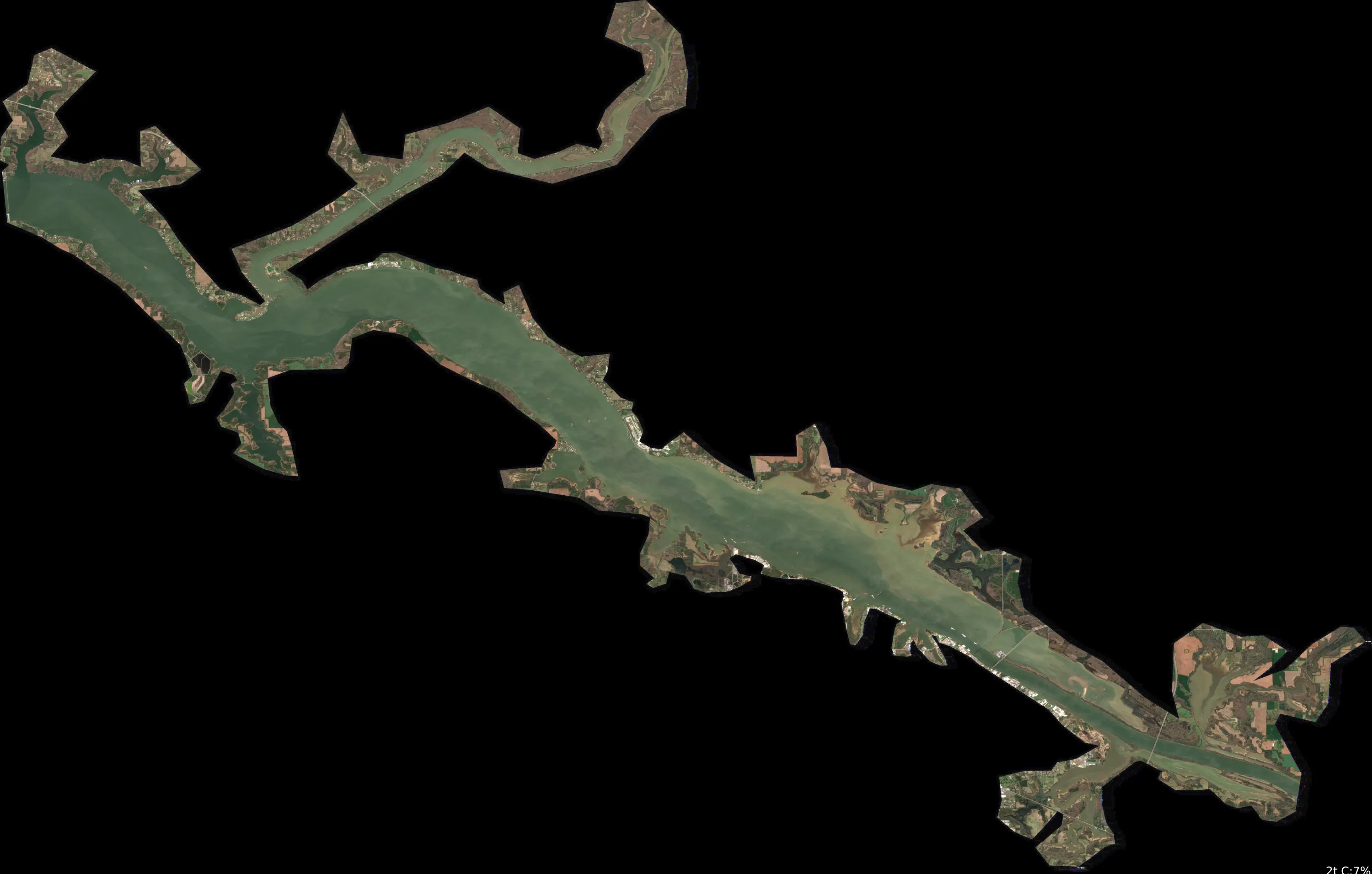
- Satellite imagery (2 days old) shows the upper segment has the most shoreline complexity — sharp points, deep coves, and color transitions. That’s where bass will set up ambush points near deeper water.
- Clarity data (historical, but consistent with chlorophyll) shows highest biological activity in the northwestern inflows. Stained, nutrient-rich water holds bait and triggers reaction strikes, especially with a moderate-vibration bait.
- Solunar major today is 11:45–2:15 PM. That’s your best bite window. The hourly conditions show light wind (2–3 mph) during that window, which is ideal for boat control and keeping the chatterbait in the strike zone.
START HERE
Head to the upper northwestern reach of the lake — the large, irregular segment with multiple jagged points and deep, dark coves. Look for the transition zone where the tan/green stained water from the inflow meets the darker main-lake water. Fish the points and the first 10–20 feet of the cove mouths. This is the “productivity edge” where baitfish concentrate and bass patrol.
THROW THIS
- Primary: 3/8-oz Z-Man ChatterBait in chartreuse/white (or a similar bladed jig). Steady retrieve just fast enough to keep the blade thumping, but slow enough to stay in contact with the bottom on the points.
- Backup: 1/2-oz Strike King KVD 1.5 squarebill in sexy shad (or a medium-diving crankbait) if the chatterbait draws follows but no commits.
- If the reaction bite dies: Switch to a 3/8-oz finesse jig (green pumpkin or brown/purple) with a matching trailer. Pitch it to the edges of the dark coves and any visible wood or rock. Deadstick it on the bottom with occasional twitches.
BEST WINDOW
Be on your first spot by 11:30 AM. The major solunar runs from 11:45 AM to 2:15 PM, but the first 30 minutes often see the most aggressive fish. The light wind (2–3 mph) is perfect for covering water with a moving bait. If thunderstorms roll in (forecast shows 8 mph wind + possible storms later), the bite may shut down early — so punch the midday window hard.
NEXT MOVE
If the chatterbait and crankbait produce no real bites by 1:00 PM, slide to the narrow central channel section of the lake. There, slow down with a 1/4-oz shaky head or a wacky-rigged Senko (green pumpkin with black flake) and work the deeper edges of the dark patches visible in the satellite imagery. The narrow channel funnels fish and the deeper pockets give them a temperature refuge. If that still fails, head to the southern segment with shallow vegetation and throw a 1/2-oz black/blue jig into the dark clusters — those are likely grass beds and will hold the most heat-stressed bass.