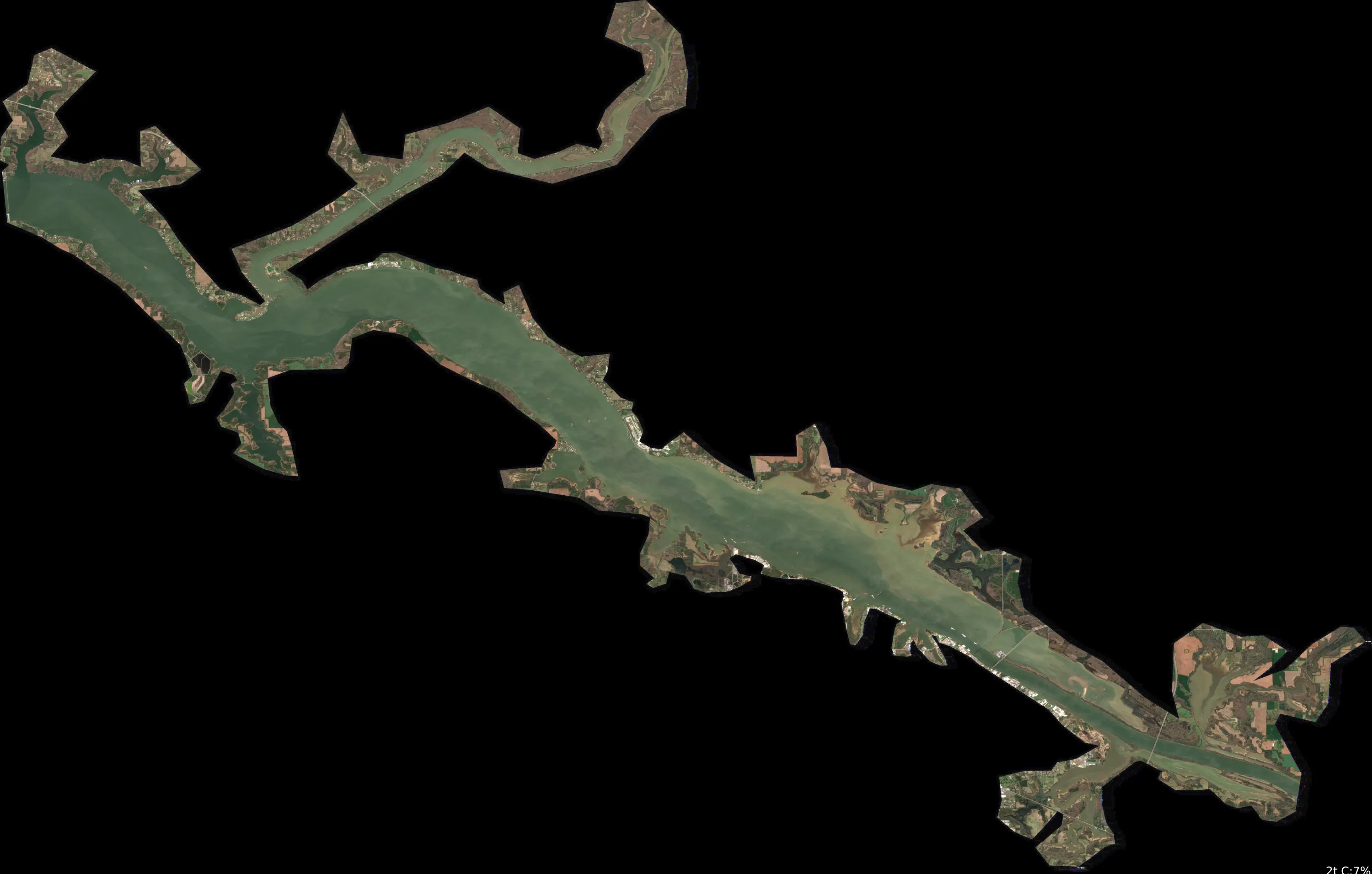
Wheeler Lake Fishing Report
If that’s dead, the southern vegetation flats with dark clusters are your last resort – work the edges with a swim jig or topwater popper in low light, but expect smaller fish.
THE CALL – Target largemouth on the northern upper segment’s productivity edge, 12–25 feet, with a chatterbait or finesse jig during the 5:53–8:23 AM window tomorrow. That’s your best shot at active fish before the heat locks them down.
WHY IT WINS
- Water temp is 83°F and stable – fish are heat-stressed but still feeding on the edges of stained, nutrient-rich water where bait concentrates. The northwestern inflows and coves are the most productive zones.
- The thermal imagery shows a 70°F transition edge on the eastern side – fish will patrol that gradient early to regulate metabolism and intercept bait pushed across the break.
- Tomorrow’s major solunar (5:53–8:23 AM) overlaps with cooler morning surface temps and light wind (2–3 mph), giving you a 2.5-hour window of higher activity without the midday burn.
START HERE – Run to the northwestern upper segment – the large, heavily indented section with sharp points and deep, dark coves visible on satellite. Target the “productivity edge” where the green, stained inflow water meets the clearer main-lake body. This is the boundary between rich forage and stable oxygen – fish will stack along that seam, especially around the first point that sticks into the darker water.
THROW THIS – Start with a 1/2-ounce chatterbait in white/chartreuse with a matching trailer – steady retrieve, just fast enough to keep the blade ticking. That moderate vibration cuts the stained water and triggers reaction strikes. If the chatterbait draws short strikes or follows, drop a 3/8-ounce finesse jig in green pumpkin/craw – pitch it to the darker cover pockets, work it slow with a drag-and-pause cadence. Big worm (plum or junebug) on a ⅜-ounce shaky head for a slower, finesse backup if they’re locked tight.
BEST WINDOW – Be on your spot by 5:45 AM tomorrow (July 7). The major solunar runs 5:53–8:23 AM, and the morning shows light wind (2 mph) and minimal sun – the best chance to get topwater or shallow reaction bites before the sun climbs and fish slide to shade or deeper breaks. If you can’t make the morning, the evening window 6:38–9:08 PM is a solid second choice with the same pattern.
NEXT MOVE – If the chatterbait and finesse jig don’t produce on the productivity edge after 45 minutes, slide to the narrow central channel section. The dark patches near the shoreline bends there indicate deeper pockets or cover where fish retreat during midday heat. Slow down with a 10-inch worm (plum) on a Texas rig, ¼-ounce weight, and drag it through the bottom contact zones. If that’s dead, the southern vegetation flats with dark clusters are your last resort – work the edges with a swim jig or topwater popper in low light, but expect smaller fish.