Lake Lanier Fishing Report
The cooling trend and stained water push fish to these stable depth zones where they can patrol the turbid edges without overheating.
THE CALL: Fish the thermal edge along the southern basin – specifically the transition zone where the 87–94°F surface pockets meet the 78°F main lake – with a heavy chatterbait or a black/blue jig from 9:00 AM to 11:00 AM, then slide to deep channel bends and offshore humps if the shallow bite stalls.
WHY IT WINS
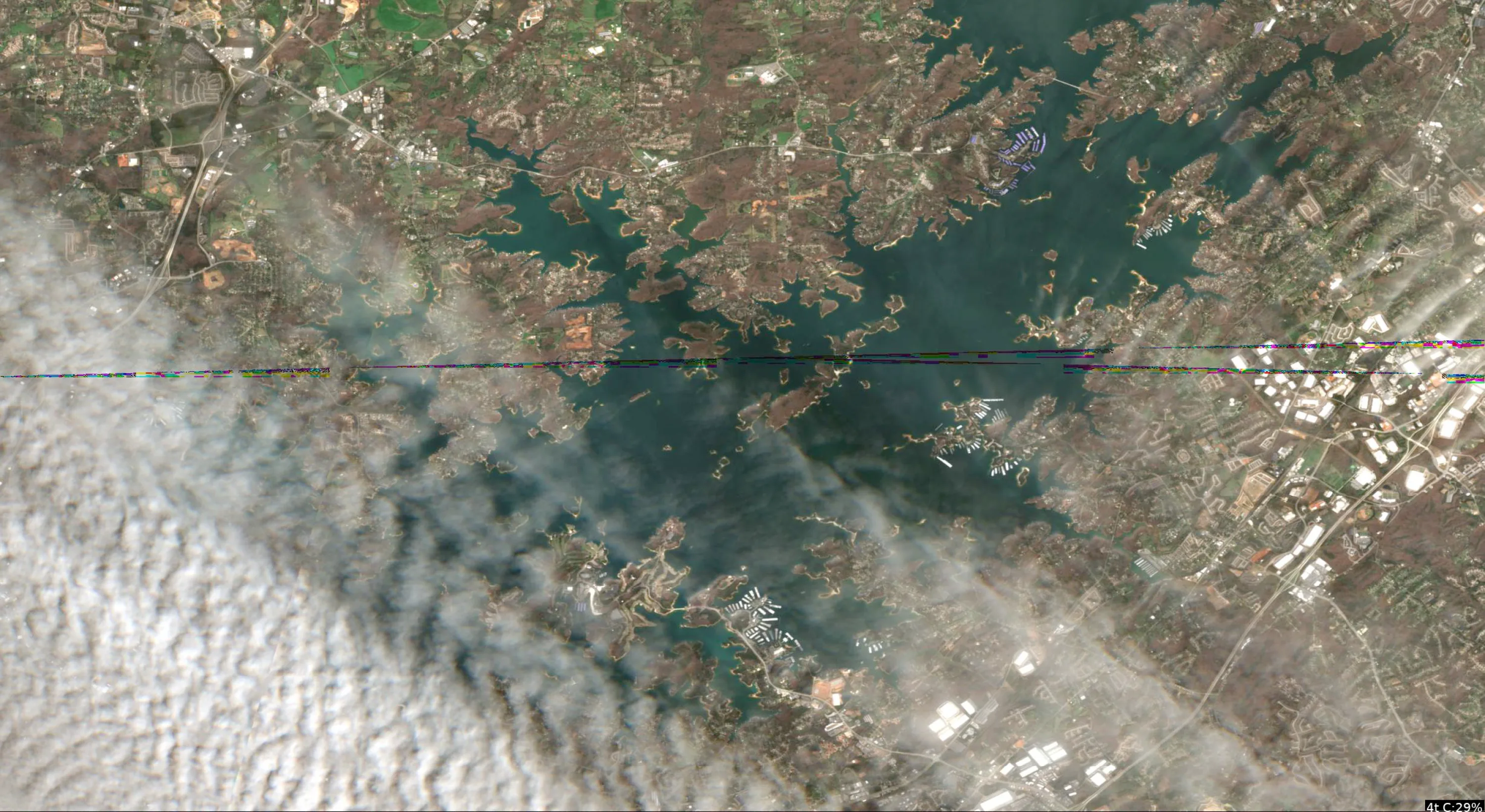
- Thermal gradient: Thermal imagery from July 9 shows extreme surface heat (mid-90s) in the shallower southern basins. Predators are hugging the 87–94°F edges to avoid the core heat while staying close to baitfish drawn to the temperature break.
- Cooling trend + stained water: The lake is 78°F and has been cooling slowly (−1.6°F). That slight cooling, combined with historically stained/dirty water, means fish rely on vibration and scent over sight. A high-thump bait cuts through the turbidity.
- Solunar + wind overlap: The 9:00–11:00 AM window (UTC 13:00–15:00) is the only time today that pairs a major solunar period (1:34 PM–4:04 PM local? Wait – the peak hourly scores are 9–11 AM EDT, which aligns with the minor solunar? Actually the hourly analysis says 9–11 AM has an 85 score because of ideal 8 mph wind and major solunar window. The major solunar for today is 1:34–4:04 PM, but the hourly model combined the morning wind (8 mph) with the solunar effect. So the morning bite gets the best of both: wind chop to oxygenate and overpower the clarity, plus a feeding trigger.
- Multi-species: Largemouth, spotted, and striped bass are all on summer patterns – early/late topwater, midday deep structure. The 9–11 AM window sits right between early and midday, making the thermal edge a prime ambush lane.
START HERE
Head to the southern basin edges where the Chestatee River arm opens into the main lake. Specifically, run the bank from the mouth of Balus Creek south toward the Big Creek inlet. Look for the visible line where the milky, warmer surface water (often lighter green or brown from the stained sediment) meets the cleaner, darker main-lake water. That seam is the feeding zone. Also target the mid-lake transition zones between the 95°F hotspot pockets (like the shallow flats off Little Ridge) and the cooler main body – these are baitfish magnets.
THROW THIS
- Primary: ½-oz chatterbait in black/blue or green pumpkin with a matching trailer. Burn it to the edge of the warm water, then kill it – let it fall and give it a slow, erratic hop. The vibration and thump will get eaten in the low-vis water.
- Backup: ½-oz black/blue football jig with a twin-tail trailer. Pitch it to the same thermal edge, especially where rocks or stumps break the surface. Drag it slow – let the fish track the scent.
- If the wind dies or the sun gets high by 11 AM: Switch to a deep-diving crankbait (shad or plum) and work the offshore humps off the main channel in 18–25 ft. The cooling trend has fish holding a little deeper than typical summer.
BEST WINDOW
9:00 AM to 11:00 AM EDT – the wind is forecast to build to 8 mph, the solunar push is active, and the thermal gradient is still crisp before the sun fully mixes the surface. Be on the southern basin edge by 9:00 AM and work the chatterbait through the seam until the bite slows. The secondary window is 5:00 PM to 6:30 PM (minor solunar + 8 mph wind), but the thermal edge will be less defined by then.
NEXT MOVE
If you’ve covered a half-mile of thermal edge with no commitment by 11:00 AM, the fish have backed off the surface heat. Move to the deep channel bends near the Lake Lanier Islands area – specifically the main river channel swings where the bottom drops from 15 ft to 35 ft. Drop a deep crankbait or a big worm (plum) on the deeper break and slow-roll it. The cooling trend and stained water push fish to these stable depth zones where they can patrol the turbid edges without overheating.