Lake Lanier Fishing Report
If pressure stays stable, the deep bite should hold through the afternoon.
THE CALL
Fish the thermal edges on the southern basin transition zones and mid-lake gradient lines with high-vibration power baits from 9:00 AM to 11:00 AM EDT, then slow down with finesse presentations during the afternoon major window (1:34–4:04 PM EDT).
WHY IT WINS
• Cooling water (+1.6°F drop over 47 readings) fish are slightly below typical summer heat levels and still keying on stable deep edges rather than burning shallow flats.
• Thermal imagery (July 9) shows surface pockets in the southern basins hit 90–95°F. Predators are hugging the 87–94°F transition seams to avoid the hot cores while ambushing bait moving through the gradient.
• Historical clarity (stained/dirty) forces fish to rely on vibration and lateral-line detection. High-thump lures cut through the turbidity, and the cooling trend means you need to cover water efficiently before fish settle into deeper midday holding.
START HERE
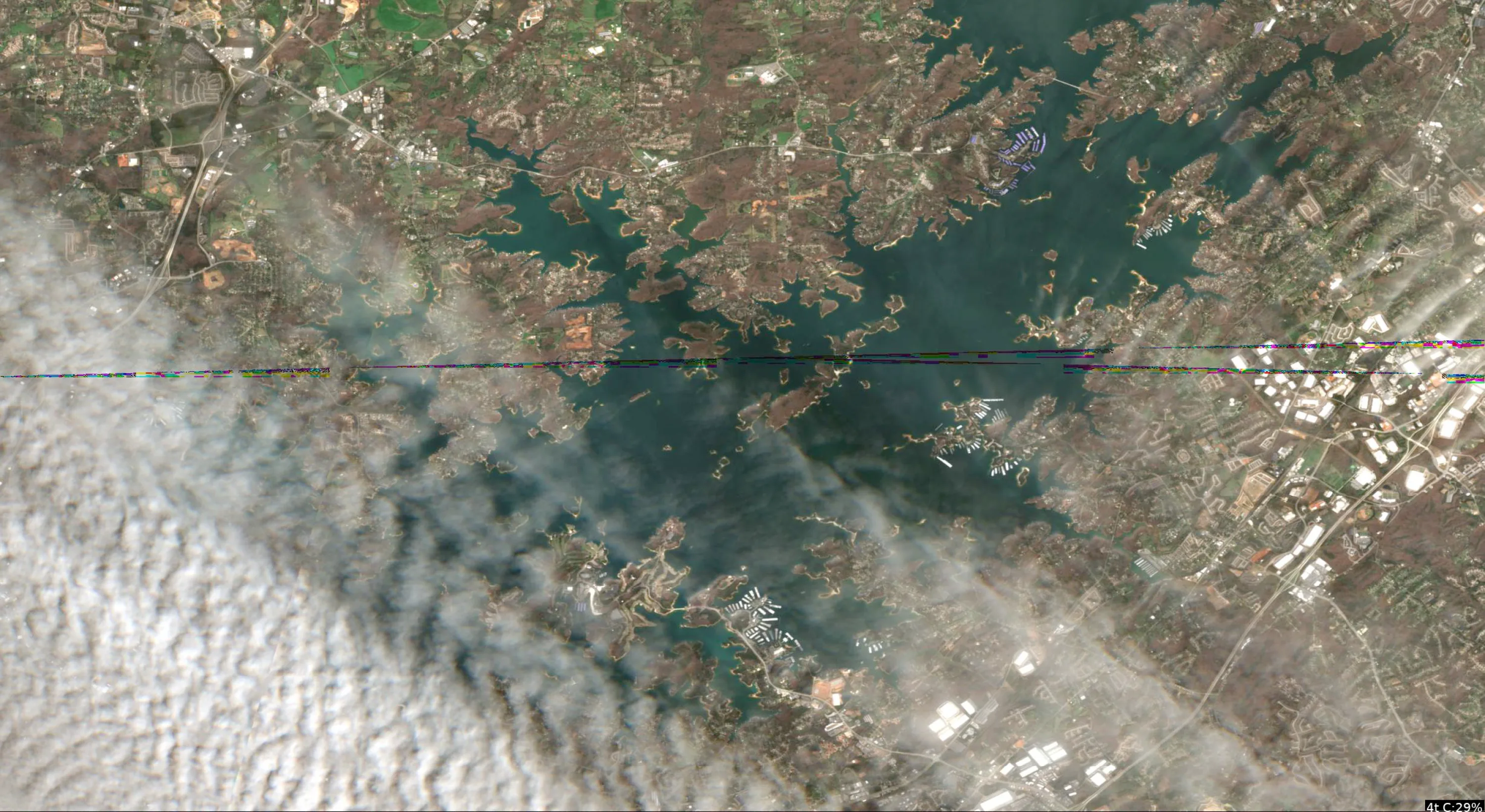
Anchor on the southern basin edges – specifically the transition zones where the hot surface pockets (87–94°F) meet the cooler main body. Look for creek mouths and points that push into these seams; the July 9 thermal image shows sharp color breaks here. The mid-lake transition zones (between the 95°F hotspots and the main basin) are also prime because they concentrate baitfish. The March clarity image shows inflow channels carry heavy sediment – these are secondary feeding zones, so fish them if the thermal edges are quiet.
THROW THIS
Primary: 1/2-ounce chatterbait in black/blue or chartreuse/white – slow-roll with irregular pauses to let fish track the vibration in stained water. Reel just fast enough to feel the blade thump.
Backup: 3/8-ounce swim jig with a matching chunk trailer, same retrieve cadence. If fish follow but won’t commit, switch to a finesse jig or wacky rig (natural in clearer pockets, darker in stained pockets) pitched to the sharpest clarity edges you can see.
BEST WINDOW
9:00–11:00 AM EDT – the hourly analysis scores this an 85/100 due to ideal 8 mph wind overlapping a major solunar window. That’s your primary window. A secondary window runs 1:34–4:04 PM EDT (major solunar, rating 4/5); the wind drops but the moon-driven feeding still holds. Start early to beat boat traffic and the midday sun.
NEXT MOVE
If the thermal edges and creek mouths are dead after 45 minutes, back off to offshore deep structure – main-lake humps, ledges, or channel drops in 18–25 feet. The cooling trend pushes fish toward stable depth; slow down with a deep crankbait (shad pattern) or a big worm (plum) fished on a carolina rig or dropshot. Target hard bottom transitions and shade lines from timber or docks. If pressure stays stable, the deep bite should hold through the afternoon.