Clinton Lake Fishing Report
If you can only fish one window, hit the 3:30–6:00 PM slot on the southern bends.
Go fishing. Clinton Lake right now is about late-spawn bass and early post-spawn reaction strikes on the warm southern banks. Your best move: start on the southern shoreline bends and points with a 1/2 oz white/chartreuse chatterbait or swim jig, hitting the wind-blown stained edges. The prime window is today from 3:28 PM to 5:58 PM (major solunar), with an early backup tomorrow at daybreak (4:00–6:00 AM).
WHY IT WINS
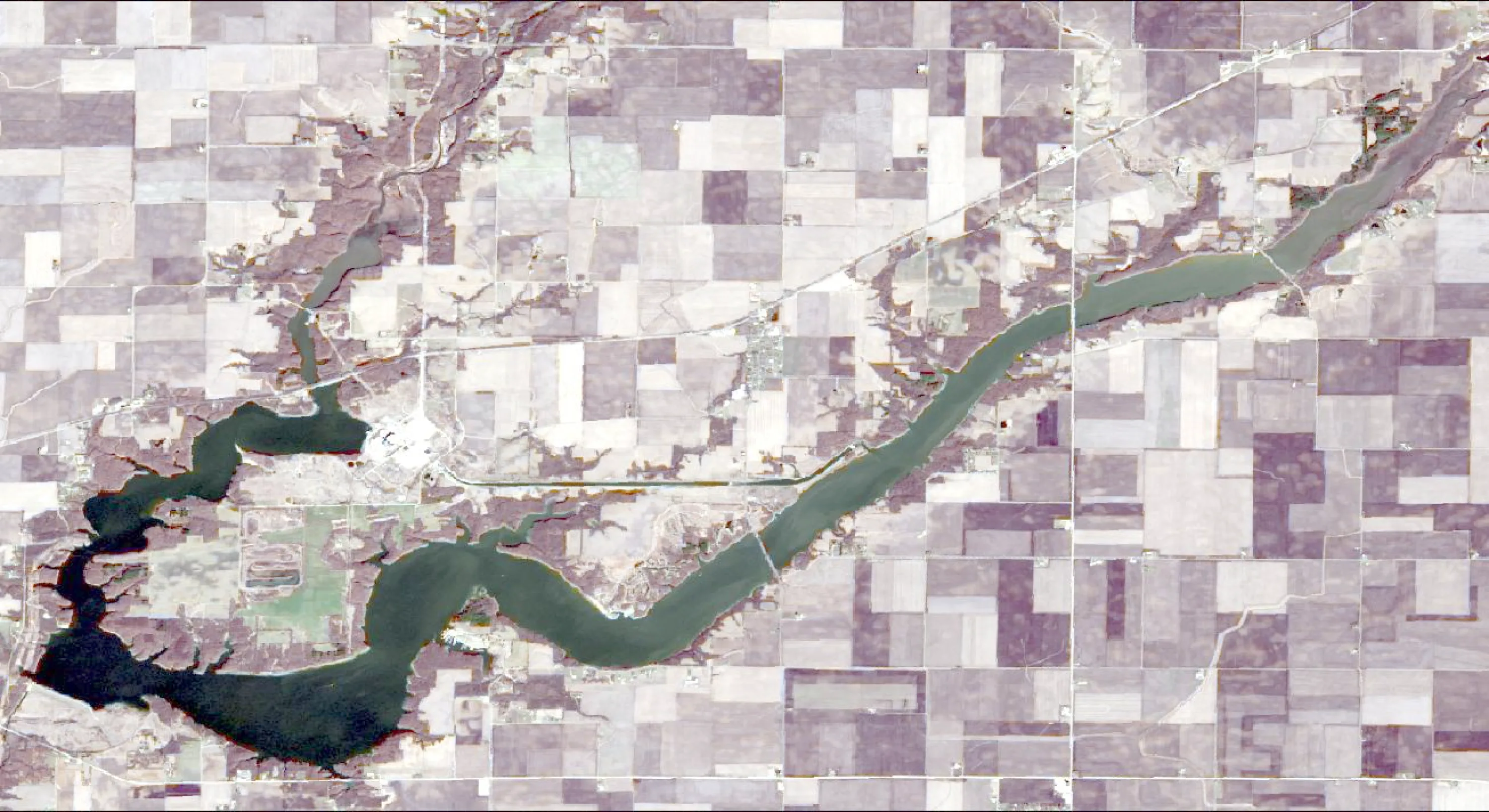
- Thermal advantage: The thermal imagery (captured May 14) shows distinct warm plumes hugging the southern shoreline and points. In 77°F water, bass seek these pockets for metabolic efficiency, especially during a cooling trend.
- Stained water + wind: Clarity analysis shows high biological productivity and suspended sediment in the western coves and southern reaches – nutrient-rich, moderate visibility. Today’s 14 mph SW wind piles that stained water onto south/windward banks, concentrating bait and making fish less line-shy. Falling pressure adds aggression.
- Timing sweet spot: Today’s major solunar (3:28–5:58 PM) overlaps with that wind and a warm thermal edge. Tomorrow’s early window (4:00–5:00 AM) scores 85/100 on hourly conditions with 9–10 mph wind – prime for a low-light reaction bite.
START HERE
- Spot #1: Southern shoreline bends and points – find the areas on thermal imagery with the strongest orange/red signatures (the warmest pockets). On the map, these are the refined bends south of the main lake body, especially where a point juts into the main basin. The combination of warm water, stained clarity, and wind exposure is your best bet.
- Landmark: Look for the southern-most major point visible on satellite – it has a sharp color break from shallow tan to dark blue. That’s a transition zone. Also fish the adjacent cove mouths on the south side.
THROW THIS
- Primary: 1/2 oz chatterbait or swim jig in white/chartreuse (for the stain) or natural shad (if you find a clearer lane). Run it at a steady, moderate pace along the wind-blown bank – make contact with every piece of wood, rock, or weed. The vibration cuts the sediment and triggers reaction.
- Backup: If the chatterbait draws follows but no commits, switch to a topwater walking bait (bone or shad) early in the window, or pitch a Texas-rigged craw (green pumpkin) to the same cover with a slower, more deliberate drag.
BEST WINDOW
- Today: 3:28 PM – 5:58 PM (major solunar). The wind should hold, the falling pressure has fish roaming, and the thermal edges will be most distinct as the sun drops.
- Tomorrow AM: 4:00 AM – 6:00 AM. Scores 85/100 on hourly conditions. Ideal 9–10 mph wind, major solunar, low light – start with the topwater, then slide to the chatterbait as light increases.
NEXT MOVE
- If the southern banks go dead after 45 minutes: Slide to the northern marina area (the developed hub) and fish the dock lines with a 3/8 oz jig and chunk (black/blue) or a weightless wacky-rigged senko. Those docks had sharp depth transitions on the satellite and hold post-spawn fish recovering in shade.
- If the wind dies or shifts: Go to the central channel edges where the 70°F thermal transition meets the stained main channel – fish the break with a 1/2 oz lipless crankbait or a deep-diving squarebill in chartreuse/blue. Bait and bass will stack on that edge.
One more thing: The stiff wind and falling pressure make today better than tomorrow for reaction strikes. If you can only fish one window, hit the 3:30–6:00 PM slot on the southern bends. That’s your money move.