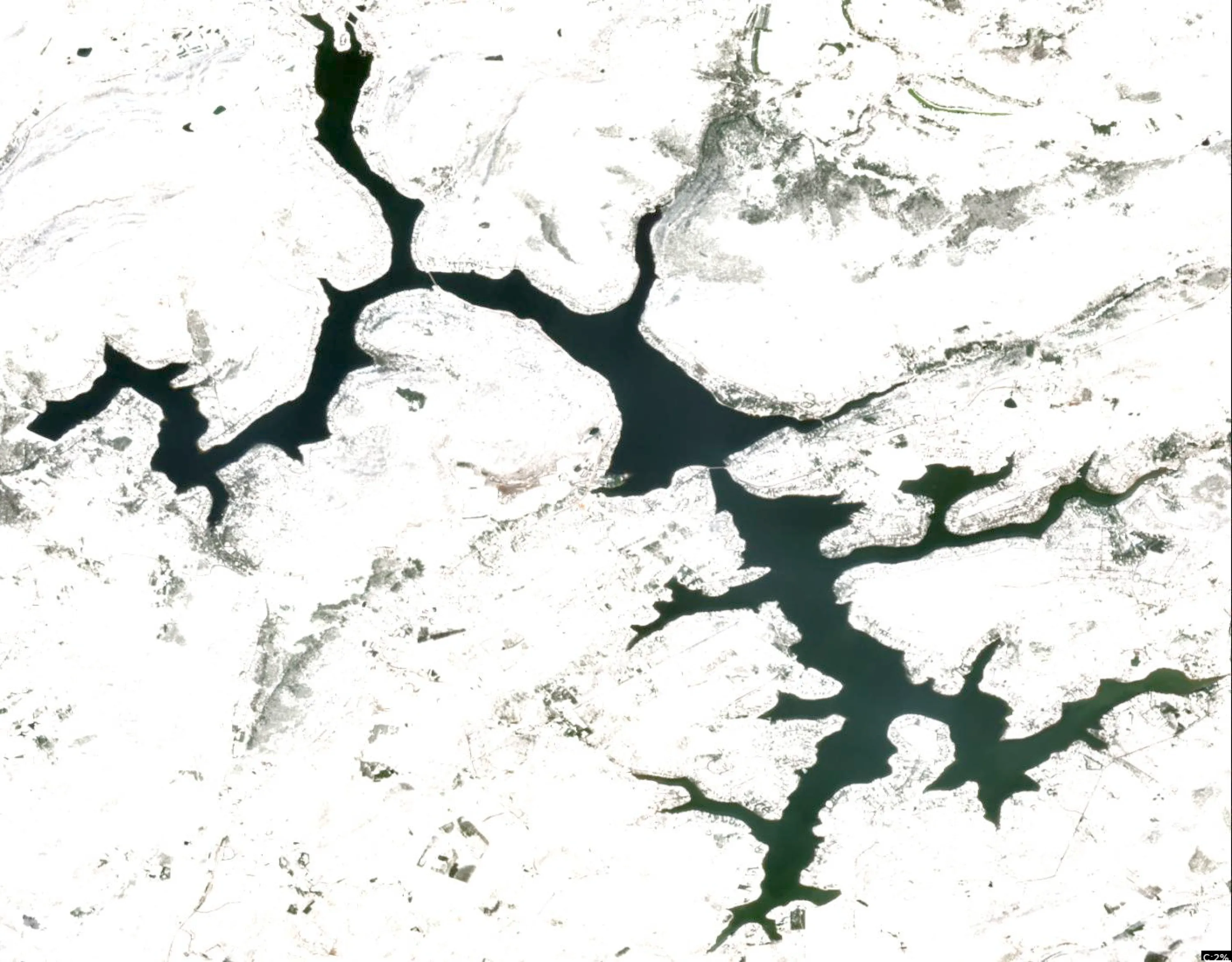
Deep Creek Lake Fishing Report
That’s your post-front, high-pressure adjustment.
THE CALL
Start the morning on the wind-blown main-lake points and creek mouths with a 3/8oz white/chartreuse chatterbait, slow-rolled just above the bottom in 3–6 feet. That’s your best shot at active pre-spawn largemouth and smallmouth before the pressure rise locks them down.
WHY IT WINS
- Water temp at 59°F is right at the edge of pre-spawn activity — fish are sluggish but a warming trend (rising 13° recently) has them moving shallow.
- Rising pressure shortens the aggressive window, so you need a reaction bait that covers water fast while the bite is on.
- Moderate west wind (5 mph now, building to 21 mph later) will push bait and stain into wind-blown banks, concentrating fish on the first hard structure they hit.
- New moon and solunar 5/5 mean early morning has peak feeding potential.
START HERE
Hit the wind-blown points and creek mouths on the west and northwest sides of the lake — the first main-lake point south of the McHenry Cove area, and the mouth of any feeder creek that gets direct west wind. Look for the transition from clearer main-lake water to slightly stained wind-mixed water. That edge is where bait and bass will stack.
THROW THIS
- Primary: 3/8oz Z-Man ChatterBait or Strike King Thunder Cricket in white/chartreuse. Retrieve at a steady slow-roll — just fast enough to feel the blade thump, keeping it in contact with bottom. Depth range 3–6 feet.
- Backup: 1/2oz white swim jig with a matching paddle-tail trailer (Keitech Swing Impact or similar) — same retrieve, slightly faster to cover water if the chatterbait isn’t getting bit.
- If the wind dies or pressure locks them: Switch to a Texas-rigged 4” creature bait (green pumpkin or white) pitched to visible cover in protected pockets — slow drag with long pauses.
BEST WINDOW
Be on the water by 7:00 AM local time. The bite will be best from first light (around 6:30) until about 9:00 AM, before the wind really cranks up and the rising pressure kills the reaction bite. After 9:00, expect fish to tighten to cover and become less willing to chase.
NEXT MOVE
If the chatterbait/swim jig doesn’t produce by 9:00 AM or the wind becomes unmanageable (over 15 mph), slide to the most protected cove you can find — ideally one with a dark bottom, laydowns, or scattered docks. Slow way down with the Texas-rig creature bait. Pitch to every piece of cover, let it sit for 10–15 seconds, then drag it an inch at a time. That’s your post-front, high-pressure adjustment.