Gull Lake Fishing Report
The fish may have pulled slightly deeper due to the cooling trend; give that cove 30 minutes before calling it.
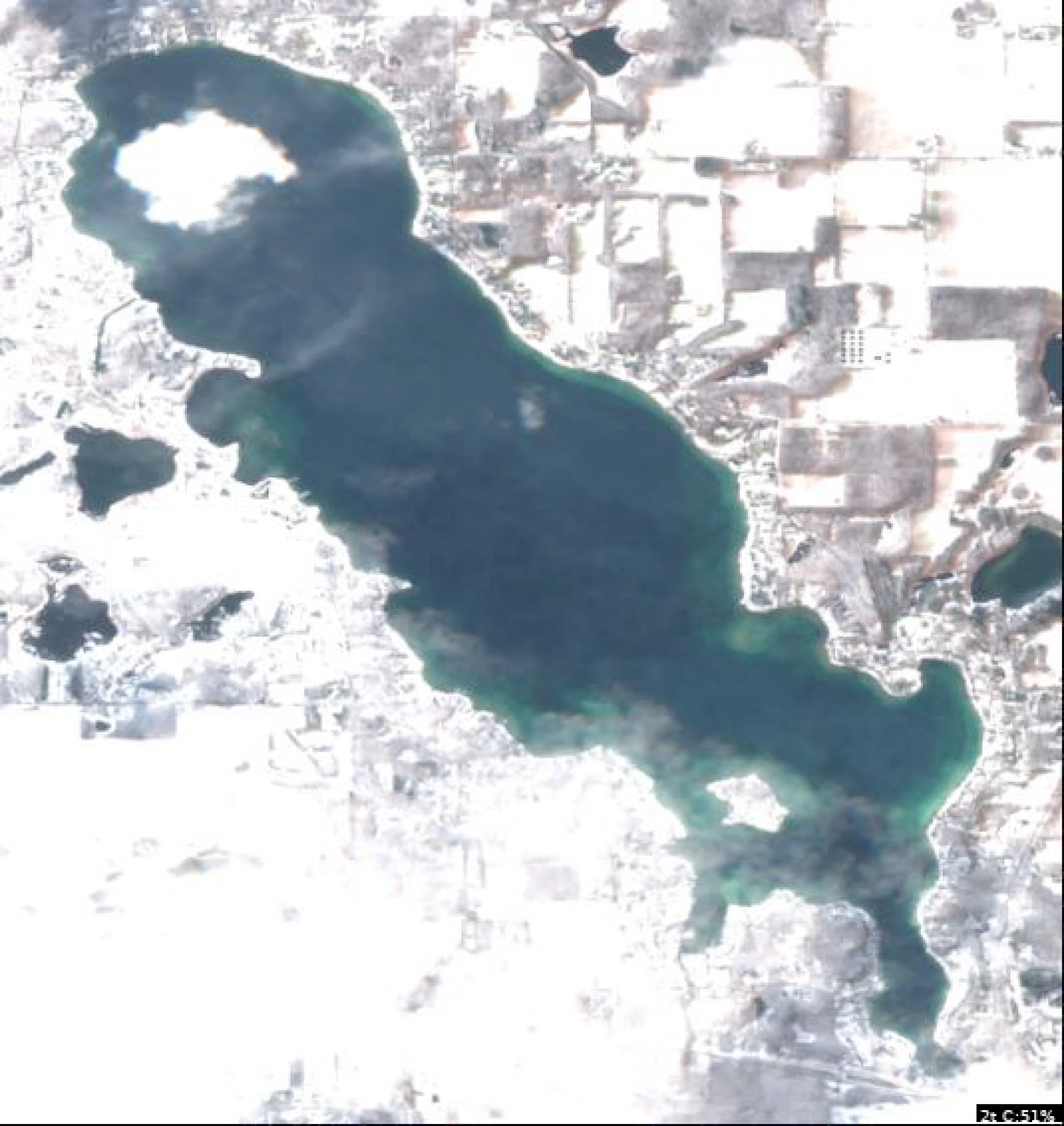
Fish the northwest corner of Gull Lake from 2:00 PM to 4:30 PM. Start on the sharp edge where stained, 63°F water meets the clearer main basin—throw a 1/2oz white/chartreuse chatterbait. If that dies, pitch a Texas-rig creature bait to the first dock or laydown on the windblown bank.
WHY IT WINS
- The warm-water satellite signature from May 28 concentrates bait and staging bass in the northwest pocket; current surface temp 63°F keeps fish in pre-spawn/spawn mode, pushing them toward the warmest available water.
- Clarity imagery shows a sharp turbidity transition along the northwest shoreline—this stained/clean seam creates a natural feeding lane where bass ambush prey moving between cover and open water.
- Full-moon major solunar window (2:02–4:32 PM) aligns with the afternoon wind (14 mph) blowing into that bank, piling up bait and activating fish.
START HERE Launch at the public access on the west side and idle into the northwest corner. Target the points and docks on the windblown western shore where the water color changes from murky green-brown to clearer blue-gray. The best structure: the first two points south of the obvious cove, and the dock rows in between.
THROW THIS
- Primary: 1/2oz chatterbait (white/chartreuse skirt, silver blade) on 15 lb fluoro. Steady retrieve at the clarity break—burn it in the dirty water, slow it down when you cross into the clean zone. Let the thump do the work.
- Backup: Texas-rigged creature bait (green pumpkin or white) on a 4/0 EWG hook, 1/4oz bullet weight. Pitch tight to every dock post, laydown, or isolated weed clump. If you see a bass swirl on the chatterbait but miss, immediately follow with the creature bait on a short pause.
BEST WINDOW Be on the water by 1:30 PM, set up on the northwest edge by 2:00 PM. The major bite window peaks between 2:30 and 4:00 PM. The rising pressure after a cool front will shorten the active feeding bursts, so the first 90 minutes are critical. Wind will blow 10–15 mph from the southwest—fish it head-on, casting downwind and working into the teeth of it for boat control.
NEXT MOVE If you work 400 yards of the northwest transition and get zero bites or only dinks, run to the southern coves. Focus on the second cove from the south end—the satellite shows complex shoreline indentations and possible creek inflow. Slow down there with a weightless wacky rig or a jig in the same green pumpkin, targeting deeper edge of visible weed beds or the first dock in the shade. The fish may have pulled slightly deeper due to the cooling trend; give that cove 30 minutes before calling it.