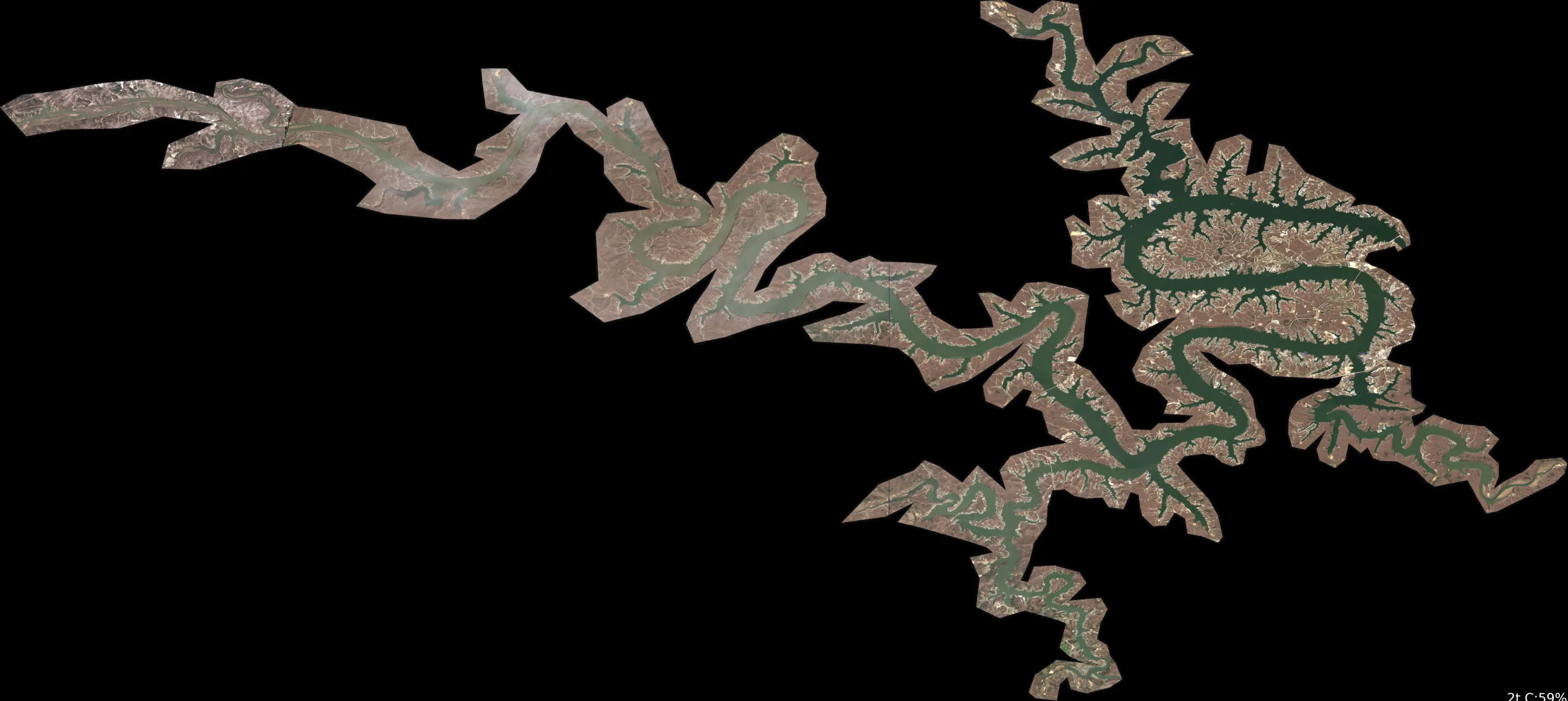
Lake of the Ozarks Fishing Report
The 80°F surface and summer calendar heuristic suggest fish that aren't reacting to search baits may be holding tighter to shade or deeper breaks, but you must verify that with your own electronics before committing.
THE CALL: Target largemouth bass in the first legally accessible wind-battered edge you verify on site, throwing a chartreuse/black Colorado spinnerbait during the 2:00–5:00 PM window when manageable 7–8 mph wind gives your bait vibration cover without blowing you off the bank.
WHY IT WINS:
- The lake-page modeled surface-water estimate of 80°F (updated 8/12) sits at the upper edge of the largemouth reference range, which is a condition constraint, not a feeding claim—it tells you to favor a presentation that triggers reaction, not finesse.
- Forecast wind holds steady at 5–8 mph through the afternoon with zero rain or storm signal through 6:00 PM; that's enough chop to break up silhouette and let a Colorado blade thump without making boat control miserable.
- The major solunar hypothesis (2:27–4:57 PM) aligns with the most manageable control window in the forecast. That is a timing hypothesis, not a bite guarantee—but it gives you a defined 2.5-hour block to test without second-guessing the clock.
START HERE: You must verify the spot on the water. No mapped spots, shoreline landmarks, or structure evidence was available from these tools. Pick a legally accessible bank that faces the measured wind direction (currently 221°) and where you can make a controlled 45° wind-assisted cast without fighting the trolling motor all day. A main-lake point or secondary point receiving direct chop is the type of area to look for, but only your eyes and electronics confirm it exists.
THROW THIS:
- Primary: ½-ounce Colorado spinnerbait, chartreuse/black, with a single gold blade. Burn it just under the surface—fast enough that the blade breaks the surface tension on a straight retrieve, slow enough that it still thumps on a pause. Wind plus unknown clarity favors vibration over profile.
- Backup: ¾-ounce deep-diving crankbait in shad pattern, square-bill or medium-diver depending on what you verify for depth on site. If the spinnerbait draws short strikes or follows without committing, slow the crankbait down with a stop-and-go retrieve.
BEST WINDOW: 2:00 PM to 5:00 PM CDT. Every hour in that block scores 70/100 for control conditions (7–8 mph wind, clear skies, no precipitation). The major solunar hypothesis (2:27–4:57 PM) falls inside it. Be casting by 2:00, not still idling.
NEXT MOVE: If you fish the entire 2.5-hour window without a strike, follow, or visible reaction, the surface-oriented search pattern is dead for today. Do not grind the same bank. Relocate to a deeper, shaded edge you verify with electronics—a creek channel swing or a bluff wall with at least 8–10 feet of water within casting range. Switch to a plum or green-pumpkin big worm on a ¼-ounce shaky head, and fish it slow with long pauses. The 80°F surface and summer calendar heuristic suggest fish that aren't reacting to search baits may be holding tighter to shade or deeper breaks, but you must verify that with your own electronics before committing.