Lake Gaston Fishing Report
The warming trend will still have fish holding on the first drop, but they’re not going to chase in dead calm — finesse will pick them off.
LAKE GASTON — AFTERNOON READ
THE CALL: Fish wind-swept main-lake points and creek-mouth bars with a chatterbait and swim jig right now before the afternoon thunderstorms fire up the bite, then switch to a jig or worm along shaded wood cover after the rain passes and pressure rebuilds.
WHY IT WINS
- Water temp is 78°F with a recent warming trend of +6.6° — fish are metabolically active and using wind and current to feed.
- Pressure is steady at 1014 mb right now, so the window is open for reaction bites before the front moves through.
- Today’s forecast calls for 9 mph wind and thunderstorms — the wind-blown banks will concentrate bait and trigger aggressive strikes, especially on the windward side of points.
- Solunar rating is 3/5 with a waxing gibbous moon — not a peak but enough to support a solid afternoon-evening window.
START HERE
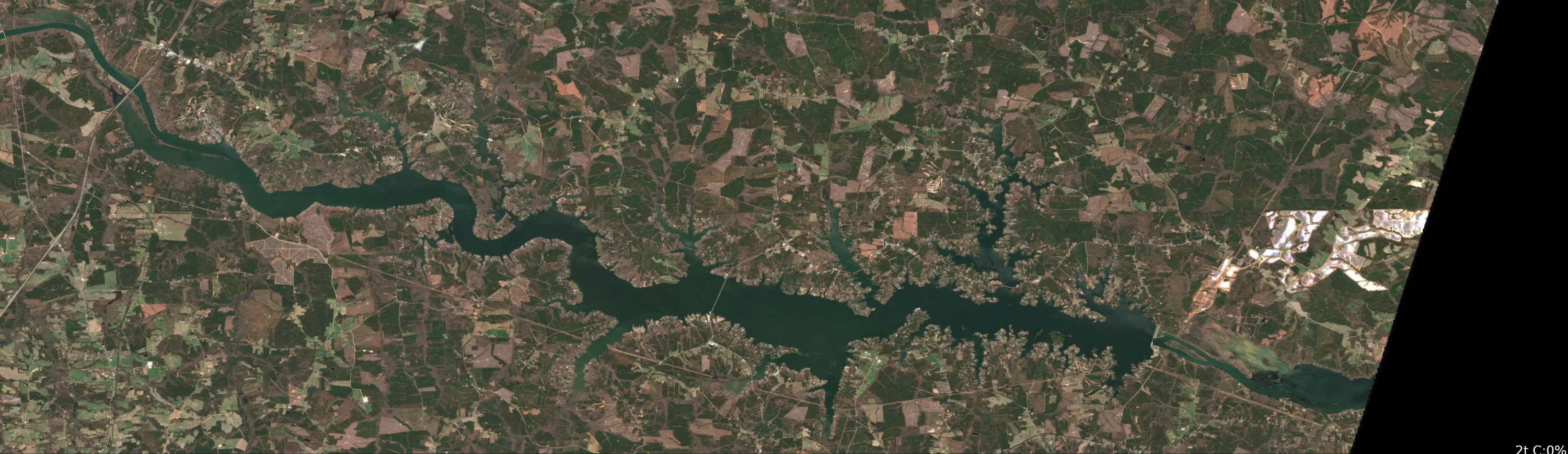
Head to the windward side of the main-lake points in the middle third of the lake — especially any point that has chunk rock, laydowns, or a grass edge visible on the latest natural imagery (June 25). If wind is already building, fish the bank that’s getting hammered. If it’s still light, start on the first creek mouth with a hard bottom and current break where the channel swings close to the bank.
THROW THIS
- Primary: ½-oz white/chartreuse chatterbait with a matching paddle-tail trailer. Work it tight to the bank at a medium-fast retrieve, letting it deflect off rocks and wood. Speed up as the wind increases.
- Backup: 3/8-oz white swim jig with a pearl swimmer trailer. Same areas, slower roll, especially if the chatterbait draws follows but no bites.
- If the storm hits and you have to wait it out: after the rain, pitch a 1/2-oz black/blue flipping jig with a craw trailer to every piece of newly soaked dock shade and laydown in the same areas.
BEST WINDOW
Now until the first thunderstorm cell arrives (roughly 3 PM – 5 PM EDT). That’s when the wind is rising and the fish are keyed on moving baits. After the storm passes (likely by 7-8 PM), the next 45–60 minutes of stable light rain and cloud cover will be your second-best window for slow-targeted presentations.
NEXT MOVE
If the wind never materializes or you spend an hour covering points with no bites, back off to the first steep break in 6–12 ft and slow down with a 1/4-oz shaky head and a green-pumpkin finesse worm. Target the edges of rock piles and any scattered stumps. The warming trend will still have fish holding on the first drop, but they’re not going to chase in dead calm — finesse will pick them off.