### **THE CALL**
If that fails by 9 AM, hit the southern shoreline coves with a topwater walking bait (Spook in bone) until 10 AM, then switch to a deep crankbait on the main-channel bends for midday fish.
Fish the thermal edges along the central basin transition from 5:00 to 8:00 AM tomorrow with a 1/2 oz white/chartreuse chatterbait, then slide to offshore structure with a deep crankbait as the sun climbs.
THE CALL
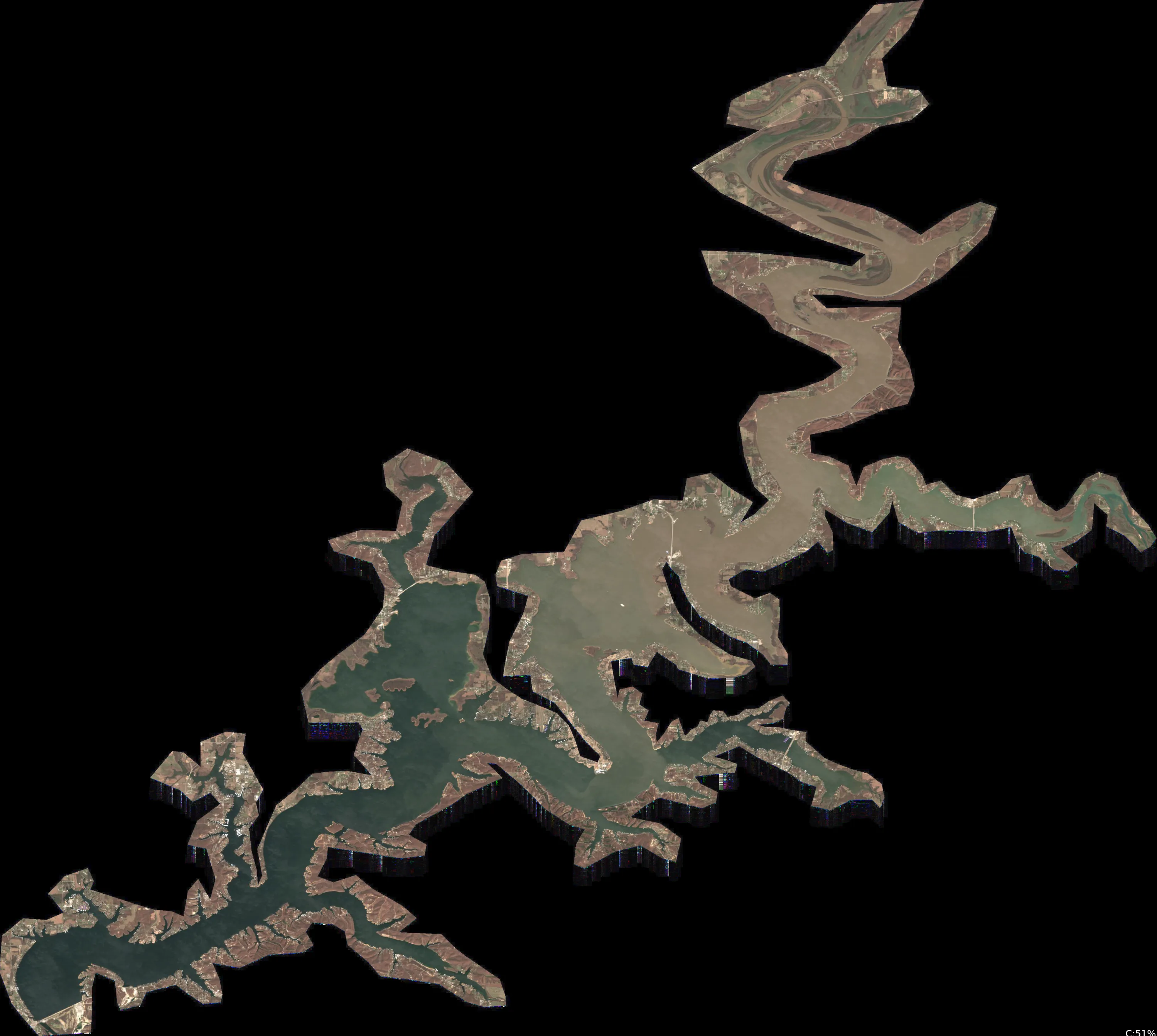
Target largemouth and spotted bass holding on the sharp thermal edges where the warm southern surface plumes (90-94°F from the June 20 imagery) meet the cooler main-lake water (83-84°F). The cooling trend (-4°F over 47 readings) and stable pressure have fish feeding up early but tight to cover. Full moon amplifies the pre-dawn window; the minor solunar at 5:50-7:20 AM overlaps sunrise. Use high-vibration baits to cut through the stained water that satellite imagery confirms along the clarity transition between the northern turbid arm and the clearer southern basin.
WHY IT WINS
- Cooling water + full moon: Fish are compensating for the recent temperature drop by feeding hard during low light. The major solunar ran 1-3:30 AM; the minor at 5:50 AM is the second peak. Wind at 12 mph from the southwest pushes bait into the clarity edge.
- Thermal gradient as a funnel: The 10-day-old thermal imagery still shows a reliable pattern: surface plumes in the southern coves hit 90°F+ but the edges at 83-84°F are where active fish hold to ambush bait shuttling between warm and cooler zones.
- Fresh satellite confirms the seam: The June 28 satellite shows a distinct color change from tan/brown sediment in the northern arm to dark blue in the south. That transition line is a depth break and clarity edge — fish use it as a feeding lane.
START HERE
Run to the central transition zone where the narrow northern arm opens into the first wide basin. You’ll see the water color change from muddy tan to clearer dark blue. Position your boat on the wind-blown side (southwest bank) where the seam is tightest. Focus on the first 50 yards of that break — it’s both a thermal edge and a clarity change. If you see bait breaking, idle up and cast.
THROW THIS
Primary: 1/2 oz white/chartreuse chatterbait with a matching paddle-tail trailer. Slow-roll it along the bottom, ticking cover. The vibration is critical in the stained water. Backup: 3/8 oz swim jig, white pearl or shad color, steady retrieve just off bottom. If fish follow but won’t eat, swap to a deep-diving squarebill in shad (crank to 8-12 feet) and make long casts parallel to the break.
BEST WINDOW
Be on the spot by 5:15 AM local time. The minor solunar runs 5:50-7:20 AM, and sunrise will fire them up. Wind at 9-12 mph from the south-southwest is perfect — it pushes plankton and shad against the clarity edge, concentrating predators. The full moon also means the overnight bite was good, but you’ll catch a second wave from 6-8 AM. After 9 AM, the sun will kill the shallow topwater bite.
NEXT MOVE
If the clarity edge gives you follows but no commits after 45 minutes, run north into the narrowest winding arm (the turbid tan channel). Fish a 3/8 oz Texas-rigged black/blue craw or a 1/2 oz flipping jig in the tight shoreline bends. The stained water and full moon make fish sluggish there; slow down and cover water methodically. If that fails by 9 AM, hit the southern shoreline coves with a topwater walking bait (Spook in bone) until 10 AM, then switch to a deep crankbait on the main-channel bends for midday fish.