Keystone Lake Fishing Report
The fish are less aggressive in the cooler water, so finesse wins.
THE CALL
Hit the north-central main channel transition zones at first light or evening this week with a chatterbait or swim jig, targeting the thermal edges where 74–76°F water meets the 69–71°F basins. The cooling trend (current 79°F, down 12°F from the seasonal norm) has fish hugging temperature breaks, and the stained northern inflows are stacking bait. Best bite: 6:00–8:30 PM today (major solunar overlap with light 4 mph wind) or 7:30–10:00 AM tomorrow.
WHY IT WINS
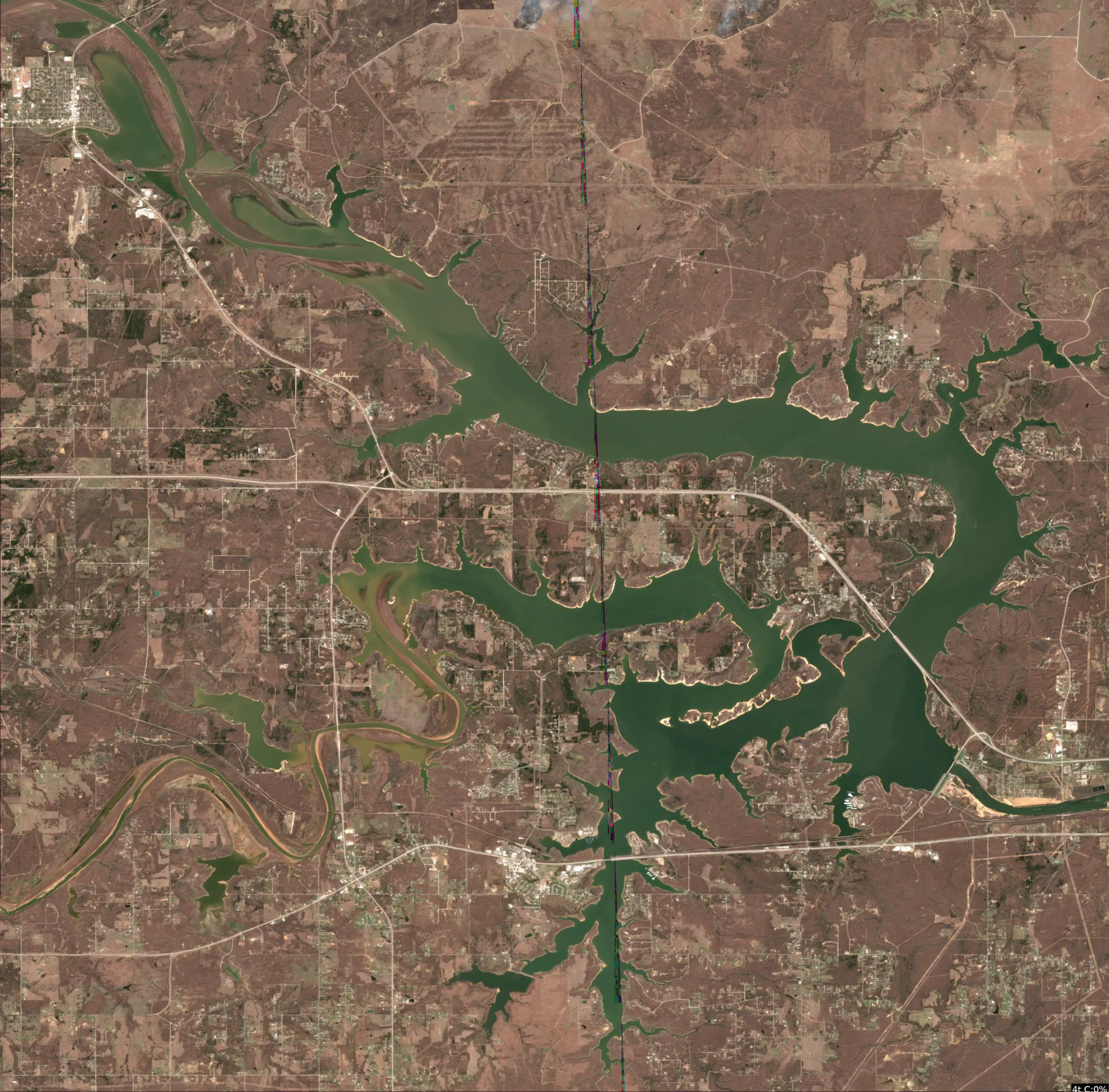
- Thermal edges concentrate fish: The June 29 thermal imagery shows a distinct gradient from the warm northern channels down to the cooler southern basins (69–71°F). Largemouth and smallmouth are holding right on those seams, using the warm water for metabolism and the cooler edges for comfort.
- Productivity equals bait: The March clarity analysis (use as relative pattern) shows the northern arms and western coves are stained by algae/plankton, not mud. That biological soup holds shad and bluegill, and the wind today (14 mph) will push that bait against the wind-blown banks, making them easy targets.
- Falling pressure, reaction bite: Pressure is dropping (1016 mb, 30.00 inHg) ahead of a front. Fish are more willing to chase a moving bait, especially in the afternoon window. The chatterbait/swim jig combo is perfect for covering water and triggering reaction strikes in stained water.
- Solunar and hourly align: The 6:01–8:31 PM major solunar overlaps with the 7:00–8:00 PM hourly peak (score 75/100, light wind). That’s your prime window.
START HERE
Launch from a ramp near the north end (e.g., Washington Irving Park or Cimarron River access). Head to the main channel transition zone where the Cimarron arm meets the central lake. Look for the thermal break on your graph: the warmer 74–76°F water pushing down from the north will meet the cooler 69–71°F main basin. Fish the edges of that seam, especially where wind is blowing into a point or bank. If you can’t find a clear thermal break, target the first wind-blown point or bank on the north side of the main channel where the stained northern water hits the clearer main lake.
THROW THIS
Primary: Chatterbait or swim jig – 3/8 to 1/2 oz, white/chartreuse in the stained water, natural shad pattern if you find a clearer lane.
- Retrieve: Steady, medium speed, keeping it just above the bottom. Let it bump cover occasionally. Vary cadence if fish follow but don’t commit.
- Backup: If the bite is sluggish or the chatterbait draws short strikes, switch to a deep-diving crankbait (6–10 ft, shad or plum color) or a Texas-rigged 10" worm (plum) and drag it along the same thermal edges. Fish are hugging the bottom near the 74–76°F zones.
BEST WINDOW
Today, July 7: 6:00–8:30 PM – major solunar, light 4 mph wind, falling pressure, and the sun is dropping. The wind will have been blowing all day, so the wind-blown banks will be dirtier and loaded with bait.
Tomorrow, July 8: 7:30–9:47 AM – the morning major solunar with light 3 mph wind. The fish will be more active on the shallow wind-blown banks before the sun gets high.
Arrive 30 minutes early to get on the water and find the thermal edge.
NEXT MOVE
If the north-central channel zones are dead after 45 minutes of honest effort, slide to the southern basin edges (69–71°F) – specifically the creek mouths and points near the dam or the southern end of the main lake. The cooler water there will hold more active fish once the warm lanes shut down. Switch to a Ned rig or dropshot (green pumpkin, 1/8 oz) and slow-roll it along the bottom. The fish are less aggressive in the cooler water, so finesse wins.