Normandy Lake Fishing Report
If the hot edges are still lifeless, pull off to the deeper central basin (82–84°F water) and dead‑stick a big worm or drop‑shot on the first offshore hump you find.
THE CALL: Hit the western basin thermal edges with a finesse jig or chatterbait during the 2–4 PM major solunar, focusing on the 84°F to 87°F transition lines where baitfish stack.
WHY IT WINS
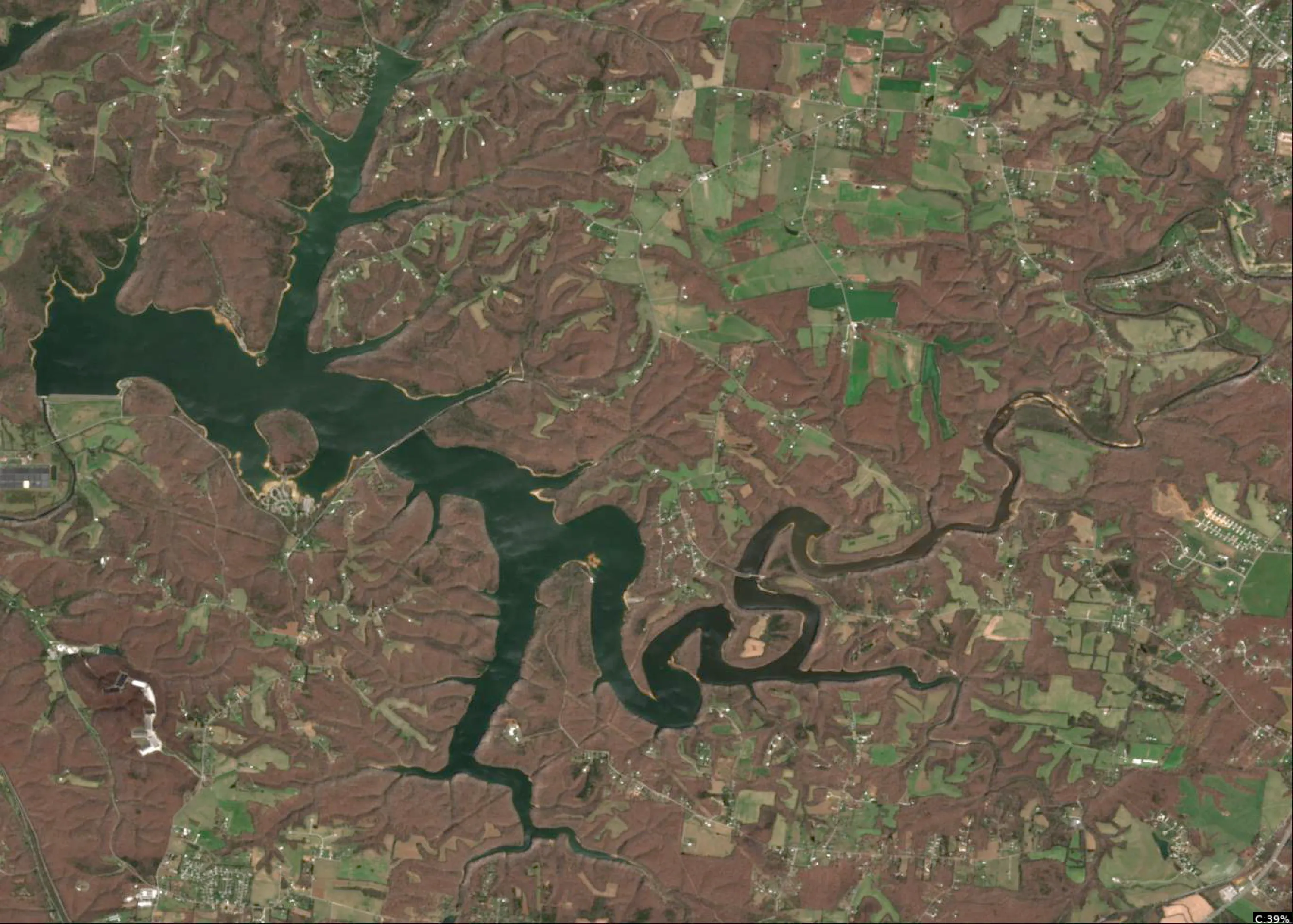
- Surface temps hit 87°F in the western basin; the sharp drop to 84°F creates a defined feeding lane. Fish hug these edges to ambush prey moving between warm and cooler water.
- A cooling trend (–6.9°F over 47 readings) and falling pressure (1019 mb) push fish to feed before the front bottoms out. The 2–4 PM solunar window overlaps with light wind (4 mph), giving you a calm, high-activity window.
- Clarity is productive and organic, not muddy. Fish will use vibration and lateral line, so a moderate-profile bait like a chatterbait or a finesse jig with a chunk cuts through the stain.
START HERE Head to the westernmost basin on the main lake. Look for the widest open water, then identify where the shoreline narrows into a finger or where the water color changes from darker (cooler) to lighter (warmer). The thermal imagery shows 87°F plumes meeting 84°F main‑body water – that’s your target. Cast to the transition edges, not the hot center. If you see surface activity, work the seam.
THROW THIS
- Primary: 1/2‑oz white/chartreuse chatterbait with a green pumpkin trailer. Steady retrieve just fast enough to tick the tops of any submerged grass or rock. The vibration cuts the organic stain.
- Backup: Finesse jig (3/8‑oz, green pumpkin or black/blue) with a twin‑tail trailer. Drag it slowly along the thermal break, pausing on any hard bottom or cover.
- If afternoon wind picks up: Switch to a 1/2‑oz spinnerbait (white with gold blades) to cover water faster on the wind‑blown side of the basin.
BEST WINDOW Be on the water by 1:30 PM local time. The major solunar runs from 1:42 PM to 4:12 PM, and hourly conditions score the 2–4 PM hours highest (75/100) due to light wind and solunar overlap. This is your best shot at a quality bite before the afternoon thunderstorms roll in (high 84°F, wind building to 9 mph).
NEXT MOVE If the western basin edges are dead after 45 minutes of thorough work, rotate to the southern creek mouths. The thermal imagery shows 87°F plumes entering the lake there as well. Work the points where the warm inflow meets the main lake – use a deep crankbait (shad pattern) to probe the 10–15 ft breakline. If the hot edges are still lifeless, pull off to the deeper central basin (82–84°F water) and dead‑stick a big worm or drop‑shot on the first offshore hump you find.