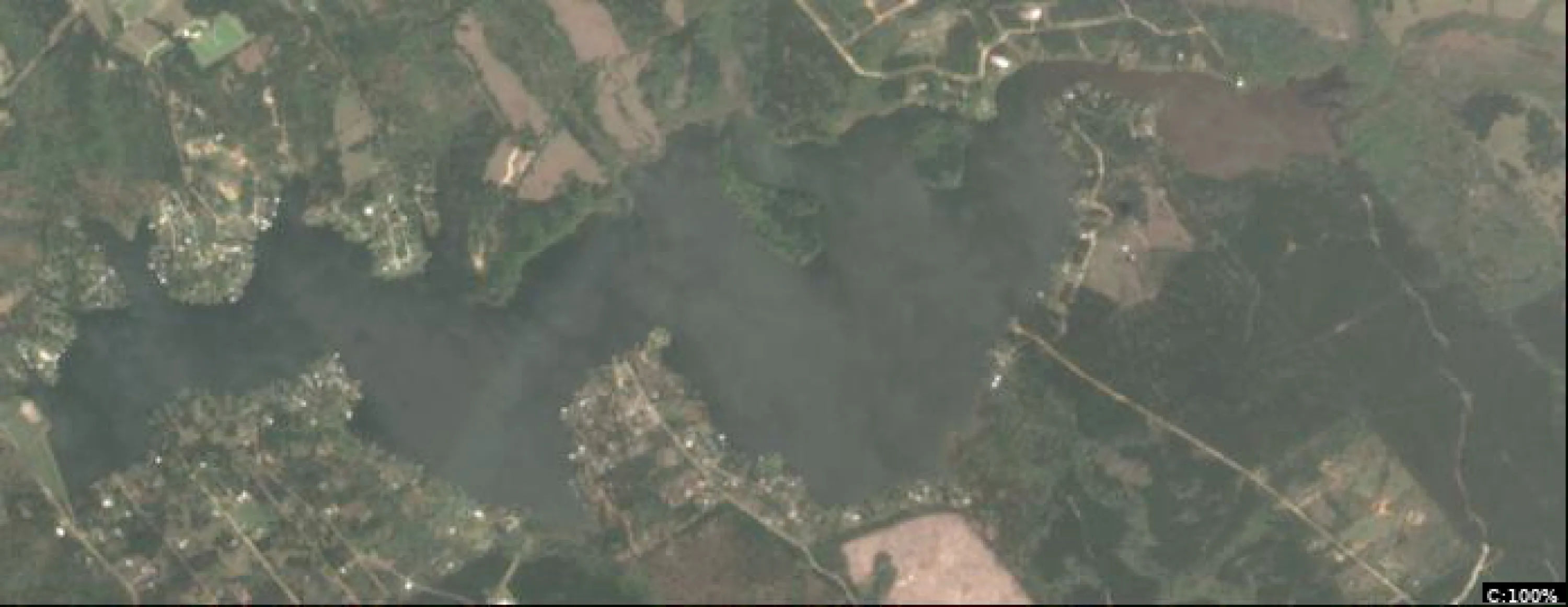
Houston County Lake Fishing Report
If that also fails, the fish are likely tied to a specific cover type or current seam you cannot confirm without a map — wrap and try again after a cold front or rain event.
THE CALL: Channel catfish on cut bait or stink bait fished bottom-contact in a legally accessible area you verify on-site. Best daylight window: 4:30 PM – 7:00 PM CDT.
WHY IT WINS
- 89°F surface water (stale 62-hr reading) is within channel catfish tolerance and supports a strong-scent bait test; the +7°F departure from the 82°F regional median favors fish that handle warm water better than bass or crappie.
- Cooling trend (−1.3°F over the last two readings) is temperature context only, but in September on a TX lake it often means the hottest stretch is easing — a slow downward tick can widen the active window without triggering stress shutdown.
- Drizzle + 5 mph wind forecast for the afternoon keeps boat control manageable and breaks up surface glare, which can encourage bottom-oriented fish to move onto flats or edges earlier than a bright-calm day.
- Major solunar period 4:31–7:01 PM is a timing hypothesis, not a bite forecast, but it aligns with the natural late-day cooling period and gives you a clean 2.5-hour block to test before dark.
START HERE
A legally accessible area you verify on-site where boat control remains manageable in the forecast 5 mph wind. No mapped spots were available. Check your map or electronics for a flat adjacent to a channel edge, a creek-channel bend, or a mid-lake hump that tops out within 8–15 ft. If you cannot confirm depth with your graph, fish a sloping bank you can see and cast a bottom rig at the breakline. Wind direction alone does not prove a point or bait lane — confirm with your transducer that the bottom is hard enough to hold scent and that you are not in soupy mud.
THROW THIS
- Primary: 3/0–5/0 circle hook, ½–1 oz sliding egg sinker, 18–24″ leader. Bait: fresh cut shad, commercial stink bait in a dip tube, or chicken liver soaked in garlic oil. Fish it slow — cast, let it settle, keep the rod in a holder, and watch for a steady pull or twitch.
- Backup: Same rig, swap to a 2/0–3/0 hook and a live sunfish (4–6″) under a slip float if the bottom bait does not draw a bite in the first 60–90 minutes.
BEST WINDOW
4:30–7:00 PM CDT. The high hits 96°F, which pushes catfish deep or tight to cover during peak sun. By 4:30 the sun angle drops and the major solunar window opens. The forecast drizzle can keep the bite going past 7:00 PM without the fish sliding off. Be set up and baited in the water by 4:15.
NEXT MOVE
If the first bottom rig produces nothing after a full pass through the solunar window (e.g., no runs, no nibbles, no channel cats on the graph), do not change the bait — change the depth. Move to the deepest third of the same structure you verified (e.g., 18–25 ft if you started at 10 ft), punch the same bait onto the bottom, and let it sit 30 minutes. If that also fails, the fish are likely tied to a specific cover type or current seam you cannot confirm without a map — wrap and try again after a cold front or rain event.