Pineview Reservoir Fishing Report – Tuesday, July 7
The second major solunar window coincides with 5–7 mph wind, ideal for covering water and triggering reaction strikes from fish that have moved off the bank.
Pineview Reservoir Fishing Report – Tuesday, July 7
THE CALL: Hit the western basin edges at first light with a white/chartreuse chatterbait or swim jig, targeting the 66–67°F cooler water transition zones from 6:34 AM to 9:04 AM. This is the best bet for active largemouth and smallmouth using the thermal break to ambush bait.
WHY IT WINS
- Water temp at 72°F is perfect for largemouth and smallmouth, but the cooling trend (−8.9°F) and thermal imagery show fish are hugging cooler 66–67°F pockets in the western basins to regulate metabolism. Those edges are highways between feeding and comfort zones.
- Morning major solunar (6:34–9:04 AM) overlaps with ideal 5 mph wind, low light, and stable pressure (29.82 inHg). The hourly data scores that window an 85/100.
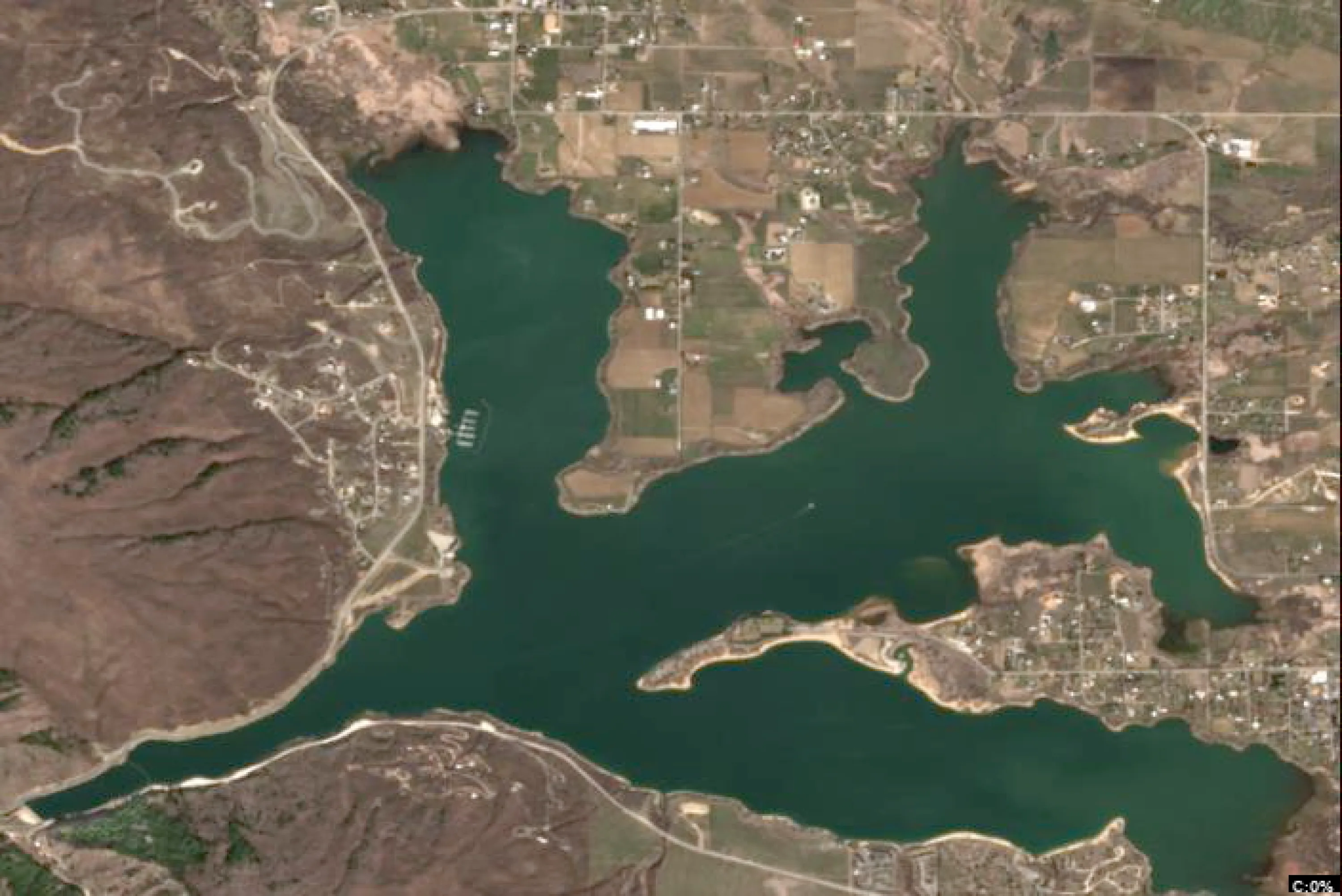
- Satellite imagery (3 days old) confirms a sharp color change from shallow tan to deep blue along the western shore, matching the thermal edge. That structure + temperature combo concentrates predators.
- Clarity is stained along shorelines (high chlorophyll), so a chatterbait’s vibration and flash cut through the biological density better than a subtle bait.
START HERE
Western Basin Edges – Run the shoreline from the main lake body into the western arm, specifically where the water darkens from tan to deep blue. The thermal imagery shows a distinct 66–67°F band hugging the western basin, with a sharp boundary to the warmer 69°F water. Target the transition line where the temperature breaks occur. Also watch for the first points and pocket mouths that force fish to funnel through the thermal seam.
THROW THIS
Primary bait: 1/2 oz chatterbait in white/chartreuse (or natural shad if you find a clearer lane). Pair with a matching trailer. Retrieve steady and medium-fast, just fast enough to keep the blade vibrating. Let it bump the bottom occasionally.
Backup bait: 3/8 oz swim jig with a paddle-tail trailer in the same color scheme. Use when you need to slow down and work the edge more deliberately.
BEST WINDOW
6:34 AM – 9:04 AM – Start on the first major solunar feeding period. The hourly data shows the 9:00 AM hour is the peak (score 85) with 5 mph wind and solunar overlap. Be on the water and casting by 6:30 AM. The bite should be strong through mid-morning, then taper as the sun gets high and the shallow water warms.
NEXT MOVE
If the western basin edges produce only follows or short strikes after 45 minutes, slide to the Marina Transition on the northern shore (cluster of white docks). The satellite imagery shows docks immediately adjacent to a sharp deep-water drop-off. This is a high-percentage backup because the docks provide shade and cover, and the deep water offers thermal refuge.
- Downsize to a 3/8 oz chatterbait or a shaky head with a 4" finesse worm in green pumpkin.
- Cast parallel to the dock edges and work the color transition line where the shallow tan meets the deep blue.
- If the sun gets bright, skip the baits under the docks.
Afternoon adjustment (3:57–6:27 PM): Shift to the central channel breaks or the eastern arm creek channel. Run a deep crankbait (shad pattern, 8–12 ft) or a big Texas-rigged worm (plum) over the offshore structure. The second major solunar window coincides with 5–7 mph wind, ideal for covering water and triggering reaction strikes from fish that have moved off the bank.