Strawberry Reservoir Fishing Report
If nothing there, move to the central/southern transition zone around 69°F contours and fish a drop-shot or jig in 20–25 ft – that stable water often holds fish when the extreme edges are too hot or too cold.
THE CALL
Fish the western shoreline thermal refuge early, then the southern inflow turbidity edge in the afternoon. Best baits are a spinnerbait or vibrating jig in high-contrast shad/chartreuse for the stained water, and a topwater walking bait for low-light windows. Prime time is 7:00–9:30 AM and 3:00–5:30 PM.
WHY IT WINS
- Measured: Thermal imagery (July 11) shows 58–68°F water hugging the western shoreline and coves, while the main lake is 73°F and western inlets hit 77°F. Fish are avoiding the heat and stacking in those cooler pockets.
- Measured: Hourly forecast for tomorrow shows 8–12 mph wind from 7–8 AM with a minor solunar window (score 80), and 8 mph wind at 3 PM overlapping a major solunar window (score 85). Both are comfortable for boat control and reaction bites.
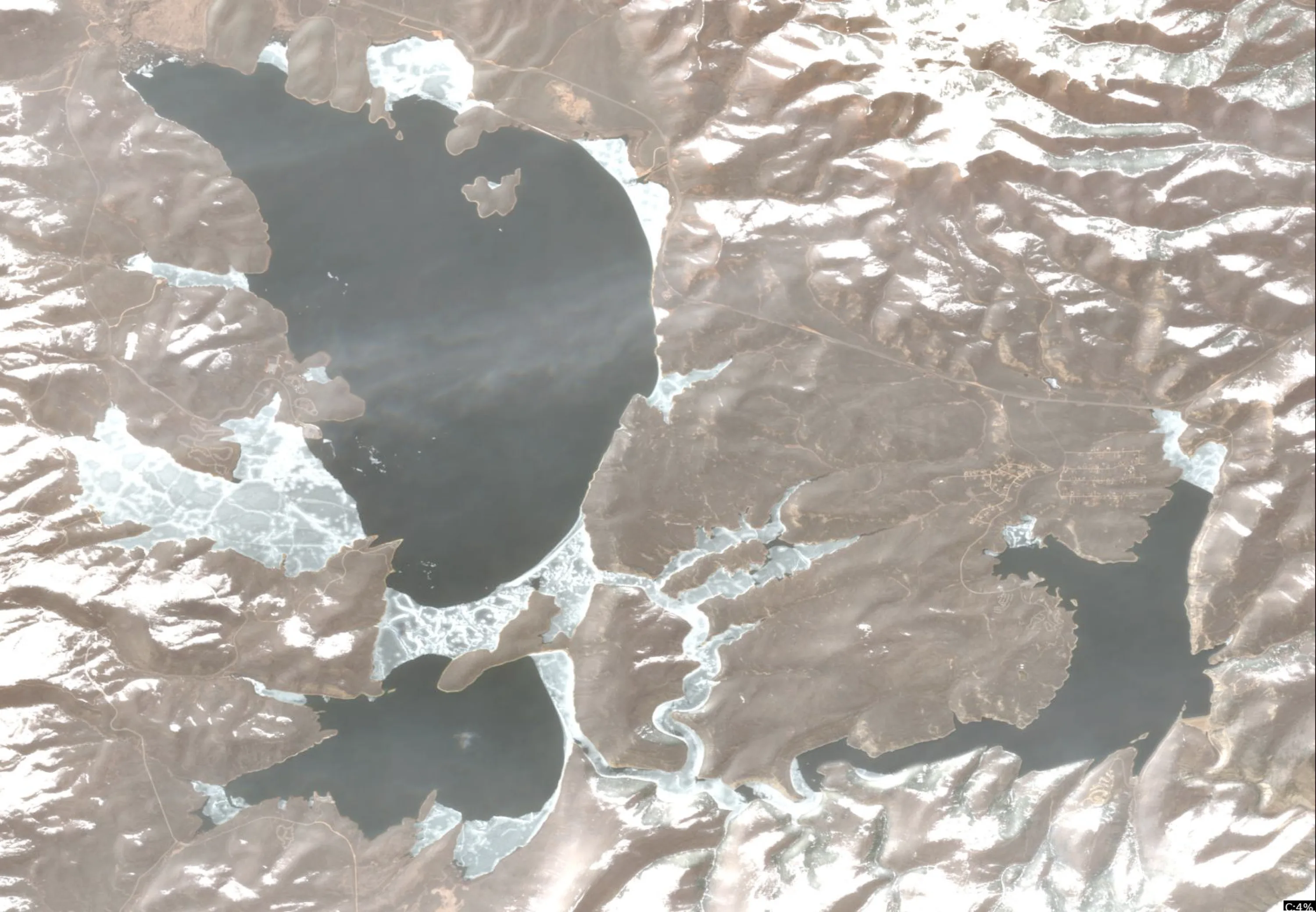
- Inferred from clarity pattern: March imagery shows heavy sediment from southern inflows, creating a sharp turbidity edge. That edge is a feeding lane for trout and bass, and the wind will push that stain into predictable zones.
START HERE
Primary: Western shoreline coves – target the transition where 58–68°F water meets the main lake. Look for any darker-bottom pockets, shade lines, or small creek seeps. The thermal break is the most reliable fish-holding area given the heat.
Backup: Southern inflow channels – fish the turbidity line where the nutrient-rich, stained water from the inlets meets clearer reservoir water. This is a high-productivity zone that will hold bait and predators, especially later in the day.
THROW THIS
- First bait: Spinnerbait or vibrating jig, 3/8–1/2 oz, high-contrast shad or chartreuse/white. Retrieve at moderate speed along the wind-blown bank and the thermal edge. The vibration and flash cut through the stained water.
- Backup bait: Topwater walking bait (bone or shad pattern) from dawn until about 8:30 AM. Fish it over the flats and points near the western coves. Use a steady walk-the-dog cadence.
- If the bite slows: Switch to a 1/4 oz jig with a green-pumpkin trailer or a drop-shot with a small worm. Fish it slowly along the bottom in 15–20 ft near the thermal break. The trout are stressed and may need a finesse presentation.
BEST WINDOW
- Window #1: 7:00–9:30 AM. Minor solunar (8:17–9:47 AM) plus 8–12 mph wind and possible light rain. The water is cooler, fish are feeding before the sun gets high.
- Window #2: 3:00–5:30 PM. Major solunar (3:18–5:48 PM) with 8 mph wind. Even though it’s hot, the solunar peak and steady breeze can trigger a reaction bite on the turbidity edge.
NEXT MOVE
If the western coves are dead after 45 minutes (no follows, no marks), slide to the southern inflow channels and focus on the turbidity edge. Slow down your retrieve, add a thumping trailer, or switch to a deep-diving crankbait to cover water. If nothing there, move to the central/southern transition zone around 69°F contours and fish a drop-shot or jig in 20–25 ft – that stable water often holds fish when the extreme edges are too hot or too cold.