Utah Lake Fishing Report
The same wind and solunar timing will still be active, but the fish will be tighter to cover.
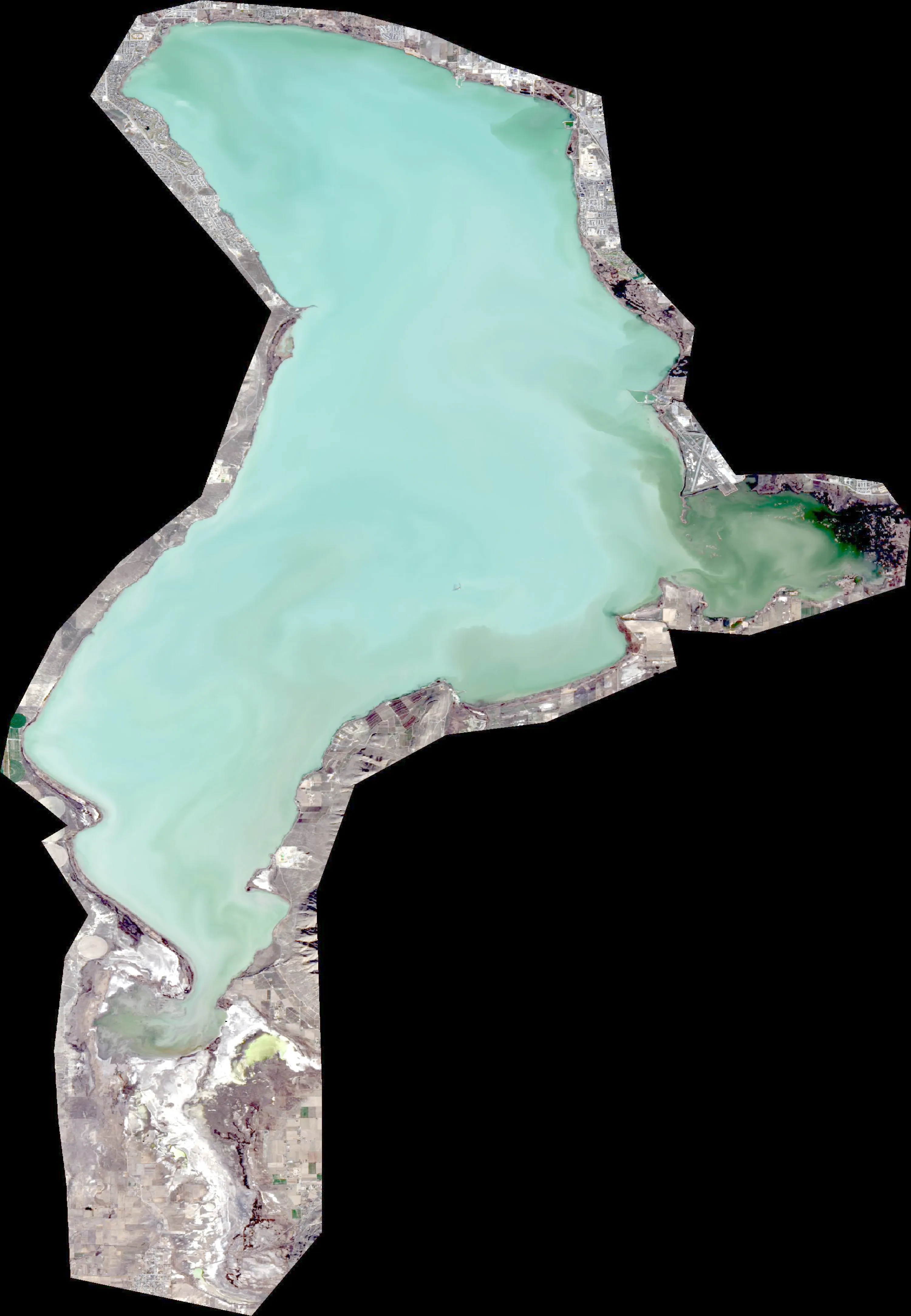
THE CALL: Hit the eastern inlet thermal gradient from 2:30 PM to 5:00 PM with a high-vibration bait — that cold water plume (53°F) pushing into the 75°F main lake is stacking catfish and bass right on the edge.
WHY IT WINS
- The 53°F cold inflow from the east creates a sharp temperature break; fish are locked on that edge to escape the 75°F main-lake heat.
- Stained water (high turbidity from the satellite and clarity maps) means fish are tracking vibration, not sight. A spinnerbait or chatterbait gives them something to home in on.
- The major solunar window (2:28–4:58 PM) overlaps with the hourly forecast showing ideal 9–11 mph wind — that combo triggers a feeding pulse.
- Cooling trend (−6.6°F over the last 47 readings) pushes fish to cooler, more stable zones like the inflow plume.
START HERE
The eastern inlet/cove — the spot where the water color shifts from the main lake’s green to a lighter, turbid channel. The thermal map shows the 53°F plume entering here, and the satellite confirms a shallow, sediment-rich zone. Target the seam where the cooler water meets the warmer main lake.
THROW THIS
- Primary: 1/2 oz chartreuse/white spinnerbait or chatterbait. Burn it just fast enough to feel the blade or rattle — fish will track it through the stain.
- Backup: 3/8 oz black/blue jig with a craw trailer for a slower, get-in-their-face presentation if the reaction bite stalls.
- Catfish option: Throw a stink bait or cut bait on a Carolina rig fished along the bottom of the same edge.
BEST WINDOW
2:30 PM to 5:00 PM. The 9 mph wind at 3:00 PM (hourly score 85) combines with the major solunar peak to create the best feeding conditions. Be on the water by 2:15 PM to get set up.
NEXT MOVE
If the eastern inlet is dead after 45 minutes, slide to the central basin vegetation edges (satellite shows large dark-green patches of weed). Fish the transition line where the light green flats meet the darker vegetation — use a 1/2 oz deep-diving crankbait (shad pattern) or a Texas-rigged 10” worm (plum) slow-rolled along the weed edges. The same wind and solunar timing will still be active, but the fish will be tighter to cover.