Yuba Lake Fishing Report
If that still fails, the cooling trend means fish have pulled to deeper main-lake breaks; drop a 3/8-oz football jig (brown/purple) on the first steep point near the warm core margin.
THE CALL:
Target northern pike and walleye on the northwest clarity/thermal edge starting at 4:05 PM with a white/chartreuse chatterbait. The best window runs from the major solunar (4:05–6:35 PM) through sunset, with the cooling trend and 7 mph NW wind stacking bait and fish into that dirty-to-clean water transition.
WHY IT WINS
- Water temp 61°F puts pike at peak and walleye in active feeding mode—both species are primed to chase right now.
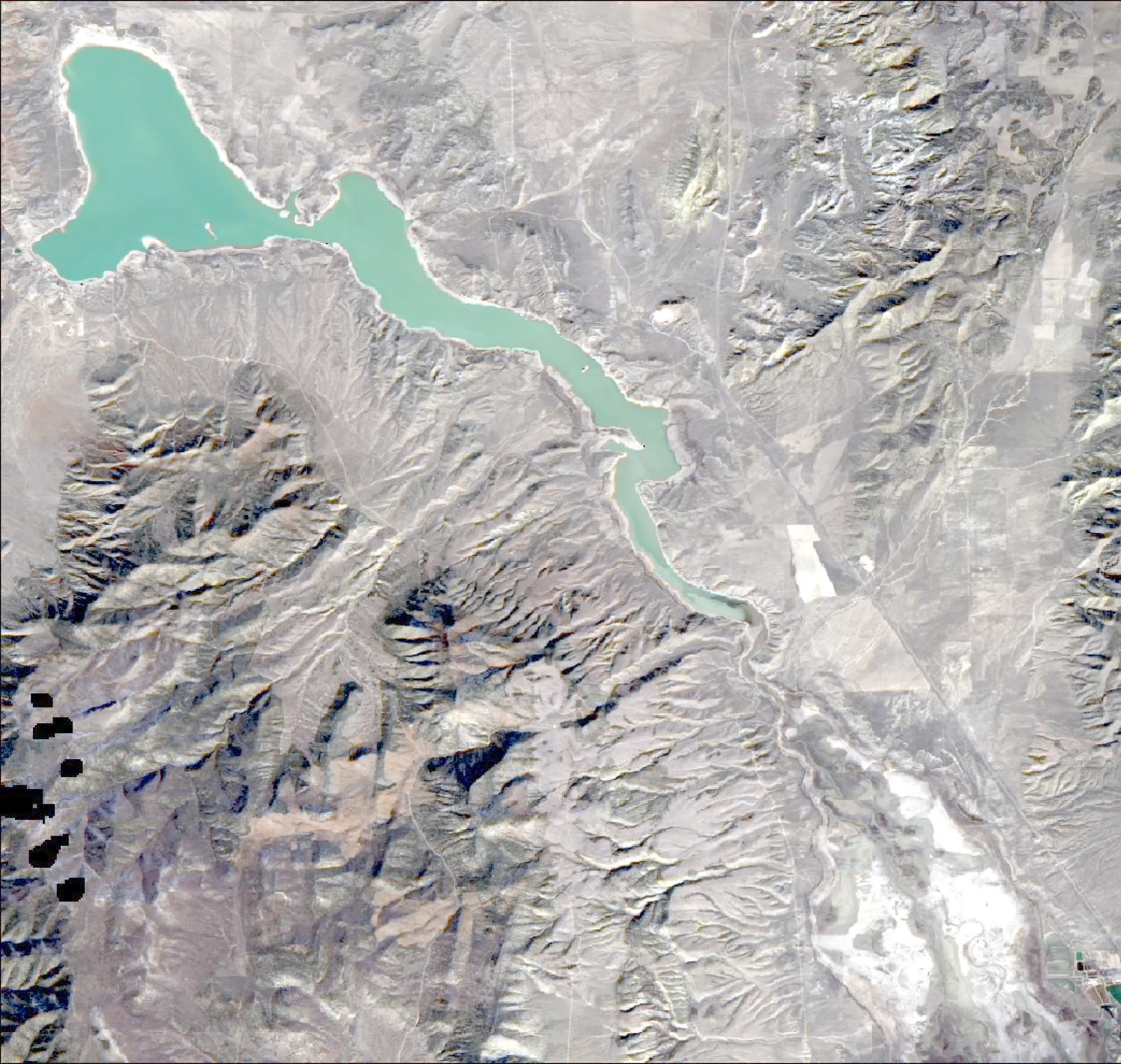
- Cooling trend (–21.5°F over 46 readings) is pushing fish toward stable, slightly warmer pockets like the thermal edge (the May 4 thermal imagery shows a 69°F core versus 57°F margins; fish will use that break as a metabolic highway).
- NW wind at 7 mph blows directly into the northwest shorelines where clarity imagery shows the highest suspended sediment and biological productivity—this concentrates bait and triggers aggressive reaction strikes.
- Major solunar 4:05–6:35 PM overlaps with the wind-optimal window and the cooling pattern’s best feeding hour before dark.
START HERE
The northwestern shoreline/inflow zone—the stretch where the clearest satellite fragments show a light-colored sediment fan meeting deeper water. This is the convergence of the warm thermal edge (closest to the 69°F core) and the highest turbidity from the March clarity maps. It’s a nutrient-rich ambush lane where pike and walleye will patrol the stain-to-clear transition. Look for visible mudlines or wind-blown banklines that create a sharp watercolor break.
THROW THIS
- Primary: ½-oz white/chartreuse Chatterbait (bladed jig) with a white swim trailer. Retrieve at a steady medium speed, just fast enough to keep the blade thumping, but vary cadence on long casts. The high vibration and bright contrast cut the stained water perfectly.
- Backup: Texas-rigged 4" white or green pumpkin creature bait (unpegged 1/8-oz weight) for pitching to shallow flats and pockets if the moving bait fails. Slow drag with 2-second pauses—target any visible cover or bedding edges.
BEST WINDOW
4:05 PM to 6:35 PM (major solunar) is your prime bite. Be on the northwestern bank by 4:00 PM. The 7 mph NW wind is already moving bait into that zone, and the cooling temperature will tighten the feeding window. If you miss that, the next best slot is tomorrow morning 1:00–2:00 AM (85/100 score, ideal wind and overnight solunar), but the evening window today is the clear winner for on-water accessibility.
NEXT MOVE
If the chatterbait produces follows but no commits within 30 minutes, switch to a spinnerbait (½-oz, white/chartreuse with double willow blades) and slow-roll it just off bottom—the extra flash and thump often triggers finicky pike.
If you have no activity at all after 45 minutes, slide south to the western cove transitions—the sediment edges identified in the clarity maps. Use a deep-diving crankbait (like a #6 Shad Rap in firetiger) to cover water faster and find the active fish. If that still fails, the cooling trend means fish have pulled to deeper main-lake breaks; drop a 3/8-oz football jig (brown/purple) on the first steep point near the warm core margin.