### Top 3 options (besides bladed jig and your Diesel Minnow)
The deeper water may hold cooler, more stable fish, but without a thermocline read it’s a scout, not a plan.
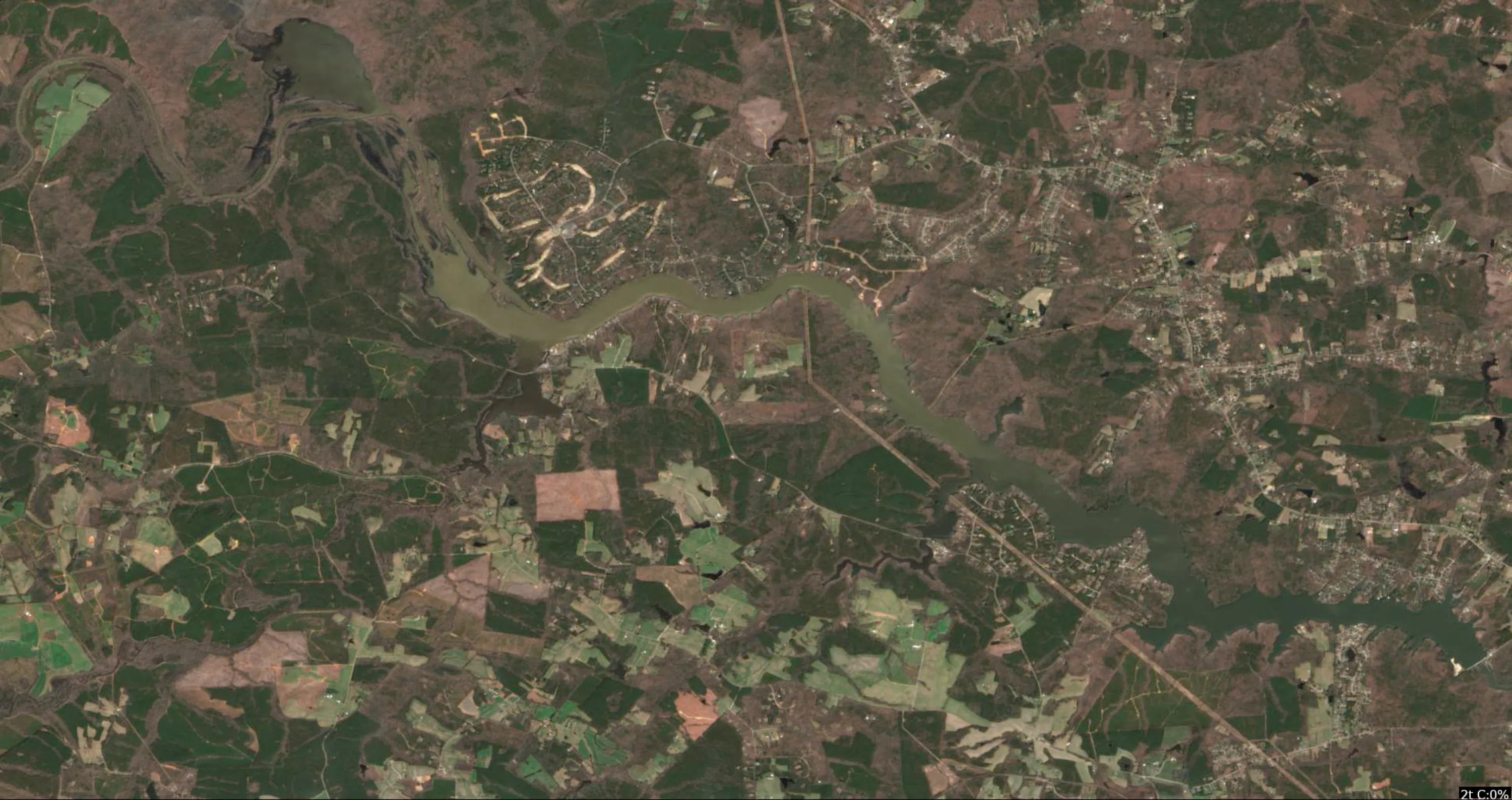
Head upriver toward thick veg and swamp shallows. In that muddy stain (<4" vis), cover and shade beat open deeper water — fish will be tight to the wood and vegetation for ambush, not wandering in the basin. If that zone dies after a real trial, then check the first main-lake point with a deeper break you can verify on electronics.
Top 3 options (besides bladed jig and your Diesel Minnow)
-
Black/plum big worm, Texas-rigged (4/0 hook, 3/8 oz weight) – Slow crawl across every log, stump, or mat edge. The dark silhouette and thumping action are the only things a bass can track in that stain. Keep it in contact with cover; any tick or pause – set.
-
Deep-diving crankbait (plum or black/chartreuse, tight wobble, loud rattle) – Run it just fast enough to deflect off wood or dig into muck edges. In <4" visibility, the noise and vibration call them in from farther than a worm. Use a squarebill if the cover is dense; a medium diver if you find a deeper channel edge in the swamp.
-
Black buzzbait – Only for first light if you commit to the upriver run before 9 AM. The calm wind lets you work it slow without a wake washing it out. Throw it tight to lily pad edges or cypress knees. Miss two blowups? Go back to the worm.
Next move if the upriver cover pattern dies after 45–60 minutes
Move to the first main-lake point or creek channel bend you can verify on your electronics. Drop the big worm on a ½ oz weight and slow-roll a black/blue jig across the break. The deeper water may hold cooler, more stable fish, but without a thermocline read it’s a scout, not a plan.