Table Rock Lake Fishing Report
If the wind dies below 5 mph after 6 PM, that's your cue to go vertical: drop the jig straight down on the brush or point instead of casting.
THE CALL: At 55°F, both species are in late-fall transition — crappie are suspending over brush in 10–20 ft near channel swings, and walleye are on main-lake and channel-swing rock in 15–25 ft. Fish the same afternoon window (2:00–5:00 PM, major solunar 2:15–4:45 PM) and target them separately: crappie first in the creek-arm brush, walleye on the deeper rock points.
CRAPPIE (black crappie — listed on this lake):
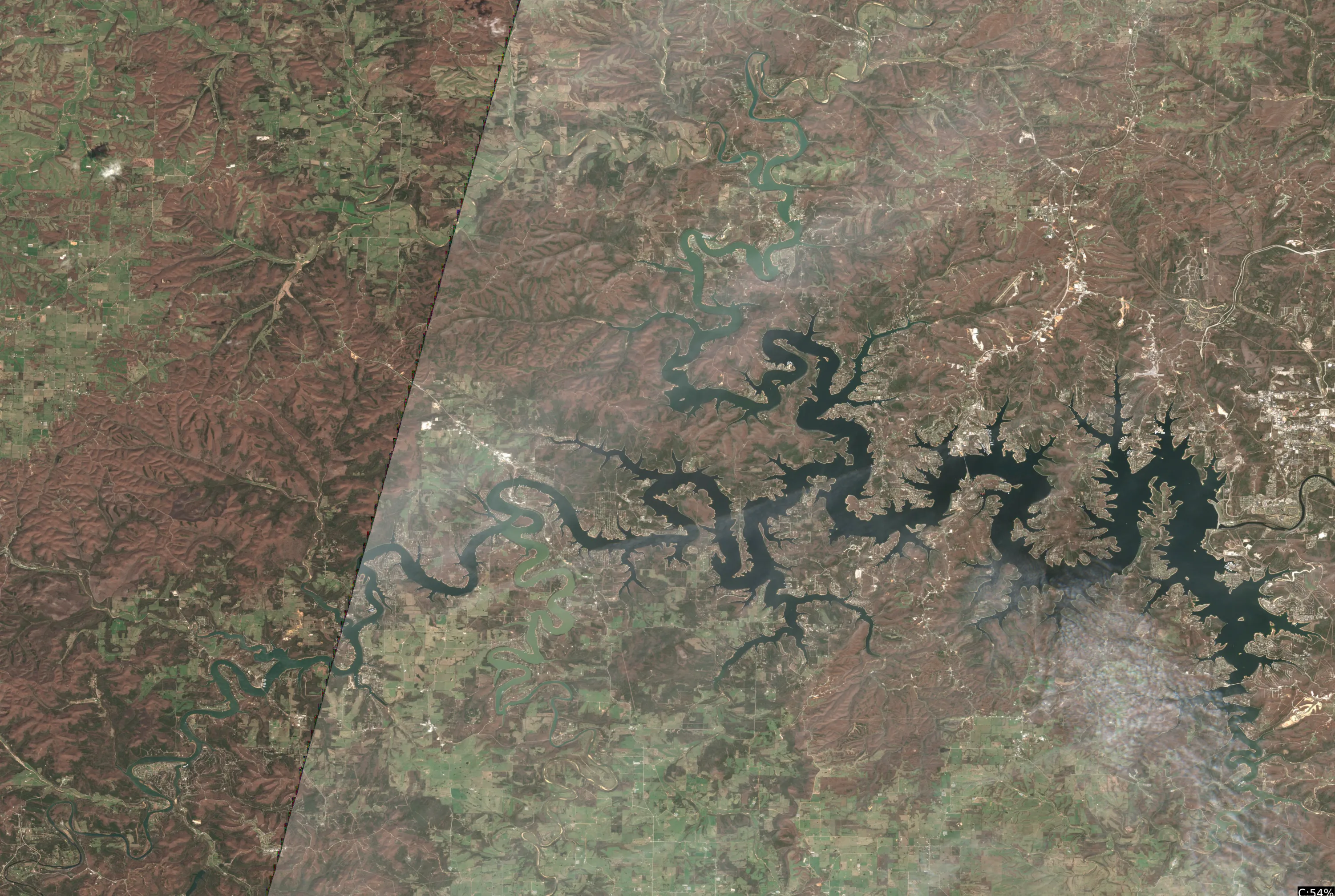
- Where: Back half of major creek arms over submerged brush piles and standing timber, 10–20 ft, suspending over the brush rather than tight to it. At 55°F they've pulled off the shallow flats and stacked on the first good brush near a channel drop. The branching inlet network on the central and eastern part of the lake (visible in the satellite imagery) is exactly the water type to check — pick the arm with the most brush and bait on your graph.
- What: 1/8–1/4-oz jig head with a 2" soft-plastic shad-profile bait in chartreuse-glitter or blue-white, fished with a slow lift-and-fall right over the brush tops. Live minnows under a slip-float set 12–15 ft will out-fish plastics if the jig bite is slow.
- Read: They'll be loosely schooled and finicky; mark brush on sonar before you cast, and fish the windward side of the brush pile first.
WALLEYE (listed, and 55°F sits mid-range in their 45–65°F reference band):
- Where: Main-lake points and channel-swing banks with chunk rock, 15–25 ft, especially where the wind is blowing into the bank. Walleye feed on shad and crawfish in this temperature band and move shallowest in low light — so the last hour before sunset (4:00–5:06 PM) is your best walleye window, not midday.
- What: 3/8-oz jighead with a 3" minnow-profile soft plastic (pearl white or fire-tiger), slow-rolled along the bottom with bottom contact, or a deep-diving crankbait (crank down to 12–15 ft) cast long and retrieved slowly into the wind. After dark, the same points take a jig tipped with a nightcrawler or minnow slow-dragged — walleye at Table Rock feed best after dark in November.
- Read: Expect them tight to the bottom on the rock, not suspended. If you mark shad balls over the point, the walleye are under them.
WHY THE SIGNALS AGREE: Your 55°F reading puts both species in their comfort band but past the fall shallow-water frenzy — both are channel-oriented now. The forecast's moderate NNW wind (11–12 mph, easing to 8–9 by 5 PM) is fishing wind: it stacks bait on the south-facing banks and lets you fish moving baits, and the major solunar period (2:15–4:45 PM) plus the pre-sunset low light line up with the warmest air of the day. Clear sky tonight means a hard cold front (32°F by 6 AM) — both species will feed ahead of it this afternoon and evening.
NEXT MOVE: If the creek-arm brush produces nothing in 45 minutes, slide to the nearest main-lake rock point and fish the walleye program — at 55°F the two patterns share the same banks, so you're never more than a short run between them. If the wind dies below 5 mph after 6 PM, that's your cue to go vertical: drop the jig straight down on the brush or point instead of casting.