El Niño Is Delaying First Ice. Here Is How to Check It Safely
NOAA says a strong-to-very strong El Niño is likely through early 2027, a pattern that often means later freeze-up and less stable ice. From Minnesota's ice-fishing lakes to Alaska's Mat-Su Valley, officials are telling people to measure the ice and treat first ice as the most dangerous part of the season.
By LakeMonster News7 min read
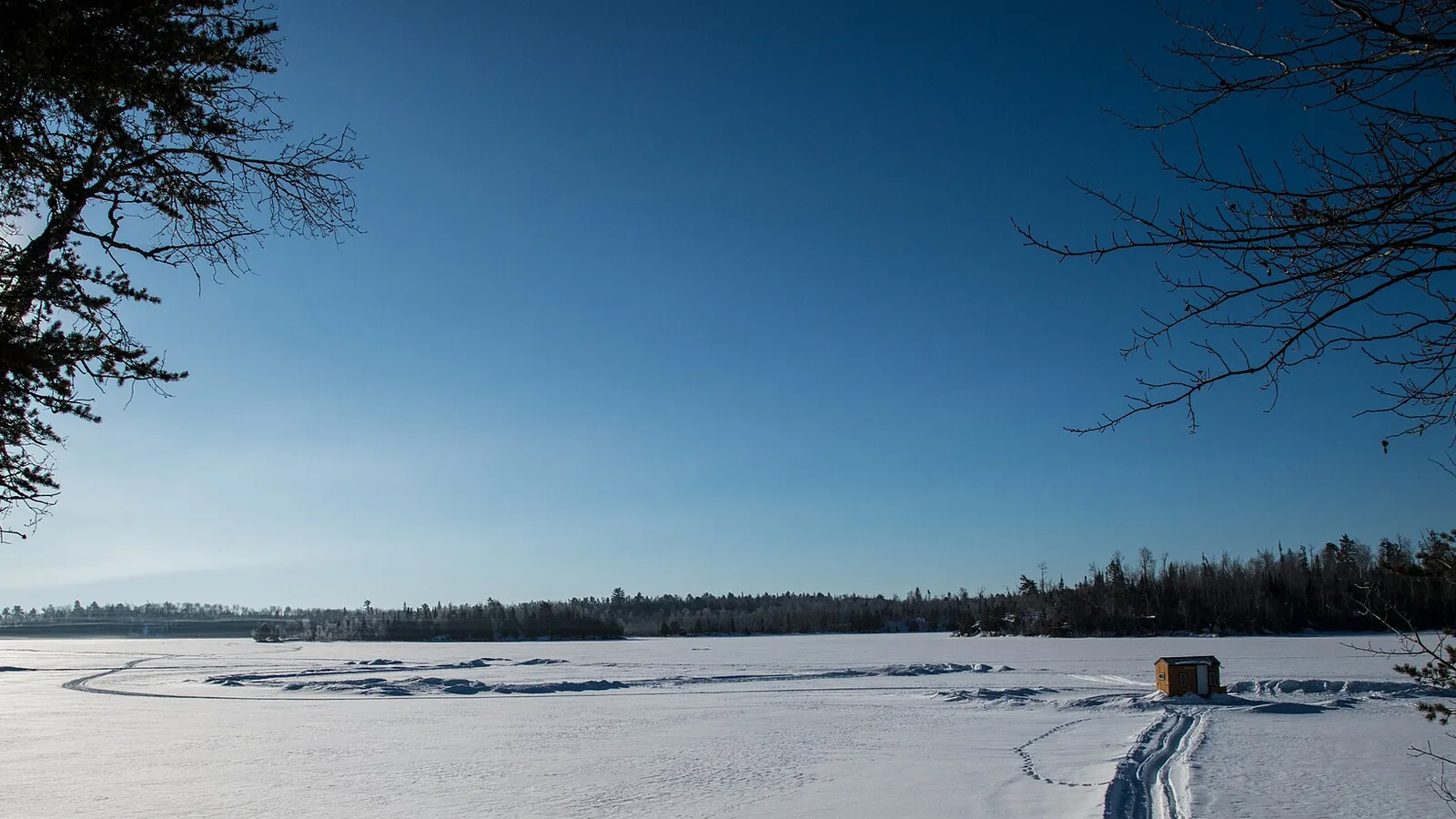
A strong El Niño is stacking the odds against an early, reliable freeze, and that matters right now, in late November, when anglers start watching small bays and backwaters for first ice.
NOAA's Climate Prediction Center, in its November 12, 2026, diagnostic discussion, kept an El Niño Advisory in place. The agency said El Niño was still strengthening, with a strong-to-very strong event "likely through January-March 2027 (remaining greater than a 79% chance)." Sea-surface temperatures in the Niño-3.4 region had reached 2.5 degrees Celsius above average. The center also put the chance of a historic event—exceeding previous El Niños back to 1950, measured as a three-month Relative Oceanic Niño Index of 2.5 degrees Celsius or more—at about 60 percent for the October-December and November-January periods.
That is a forecast, not a promise of any one week's weather. It is, however, the same pattern that historically means later ice-up, a shorter hard-water season, and ice that is less predictable for people heading onto northern lakes.
Why this winter is making officials nervous
In Minnesota, state climatologist Pete Boulay told the Grand Forks Herald on October 31 that the current event stands out even among strong El Niños. "This is the warmest El Niño we've seen on record, and so we're in uncharted territory ... so we don't know what's going to happen," he said.
Boulay also made a useful distinction: in past El Niño winters, Minnesota lakes have still frozen. The ice may just arrive later and leave earlier. Vince Ojard, who manages Border View Lodge on Lake of the Woods, told the Herald that his winter business usually sees anglers on the ice by mid-December, and that a late start is what worries him.
Farther south in the Minnesota market, FOX 9 reported on November 6 that ice-fishing groups were already asking when lakes would freeze, and that many local lakes still had water temperatures in the mid-50s in early November. The station, citing the Minnesota DNR and the State Climatology Office, said El Niño winters often push freeze-up later into December and can bring a faster March melt. It also noted a wild card: a sudden stratospheric warming event can break down the polar vortex and send Arctic air south, sometimes in the middle of an otherwise mild pattern.
The U.S. Geological Survey's Midwest El Niño briefing, last updated in September, reached a similar conclusion for ice fishing in particular. Warmer winters and fewer hard cold spells, the agency wrote, "will reduce lake ice cover and stability. For ice fishing, this will increase safety risks and shorten the season." In three of the four most recent very strong El Niños, USGS said, maximum ice cover on each of the Great Lakes was lower than average, and the peak often came earlier in the year. The 1991-92 winter was the exception, with heavier ice on Superior, Huron, and Erie.
That Great Lakes record is a useful backdrop, not a daily ice report. As of November 22, NOAA's daily ice-concentration file for the new 2026-27 season had not yet been posted, which is consistent with a still-open start to the season on the big lakes. Inland lakes such as Mille Lacs and Leech Lake follow their own calendars, and first ice almost always forms on smaller, sheltered water before it does on a main basin.
The delay is not only a Midwest story. In Alaska's Matanuska-Susitna Borough, a November 20 report from the Mat-Su Sentinel, published by Alaska Public Media, said warmer-than-usual temperatures tied to El Niño had pushed typical ice formation back by weeks. Outdoor instructor Luc Mehl warned that people used to early, strong ice were starting to go out on thinner ice than they normally would. Brian Davis, the borough's deputy fire and rescue director, said ice thickness can change in a few feet and that you cannot judge strength by looking at it.
The numbers that actually keep you dry
The most widely used foot-travel guideline in the Upper Midwest is straightforward, and it is for new, clear ice only. The Minnesota Department of Natural Resources says to stay off ice under 4 inches; 4 inches is the minimum it lists for ice fishing or other activity on foot; 5 to 7 inches for a snowmobile or small ATV; 9 to 10 inches for a small car or SUV; and thicker ice for heavier trucks and wheelhouses. New York's Department of Environmental Conservation publishes a similar table, with 4 inches for a person on foot and a warning that many anglers prefer 5 inches before they walk out. Officials in Alaska's Mat-Su Borough also cited 4 inches as a minimum for a person.
Those numbers shrink fast if the ice is not clear and new. Minnesota's DNR says white ice—formed when snow melts and refreezes on top of the lake—is only about half as strong as new, clear ice, and that you should double the thickness guidelines on white ice. New York gives the same half-strength warning for slush or white ice. Thickness is also uneven. Minnesota's DNR puts it bluntly: ice can be two feet thick in one place and one inch thick a few yards away, and currents, springs, snow cover, sun, and decaying plants all change the picture.
The DNR does not measure ice thickness on Minnesota lakes. Your safety is your responsibility, the agency says, and the only reliable check is to drill or chisel a hole and measure as you go.
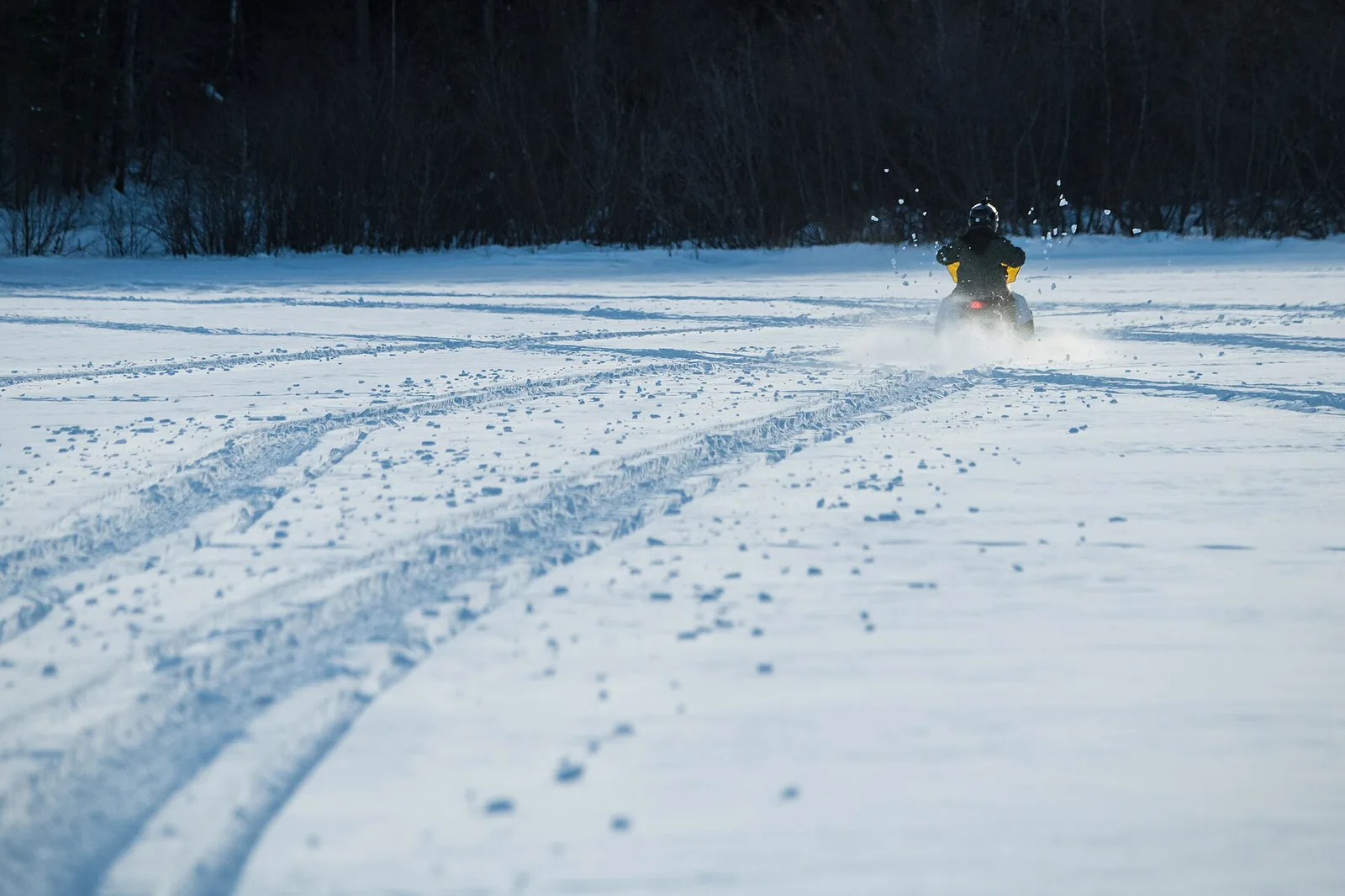 Photo: USDA Forest Service, via Wikimedia Commons · Public domain (U.S. government work)
A snowmobile on Bass Lake in Superior National Forest on February 28, 2018. Minnesota's DNR lists 5 to 7 inches of new, clear ice as the minimum for a snowmobile or small ATV, and it says to double those figures on weaker white ice. Photo: USDA Forest Service, public domain, via Wikimedia Commons.
First ice and last ice are the two most dangerous times of the winter, Mehl told Alaska Public Media, because the sheet is still changing. His habit this time of year is to test near shore, in shallow water, and turn around if the ice is not ready. Davis advised anyone who sees a person go through to call emergency services, throw a rope if it is safe, and not walk out after them.
A practical kit for those first trips is simple: a spud bar or chisel to test ahead of you, a tape measure, a set of ice picks you can reach if you fall in, a throwable rope, and a life jacket or float suit. Ice picks, float coats, and ice safety gear are sold at Scheels, Bass Pro Shops, and Amazon. The gear does not replace the thickness check. It is what you want in hand if the check comes too late.
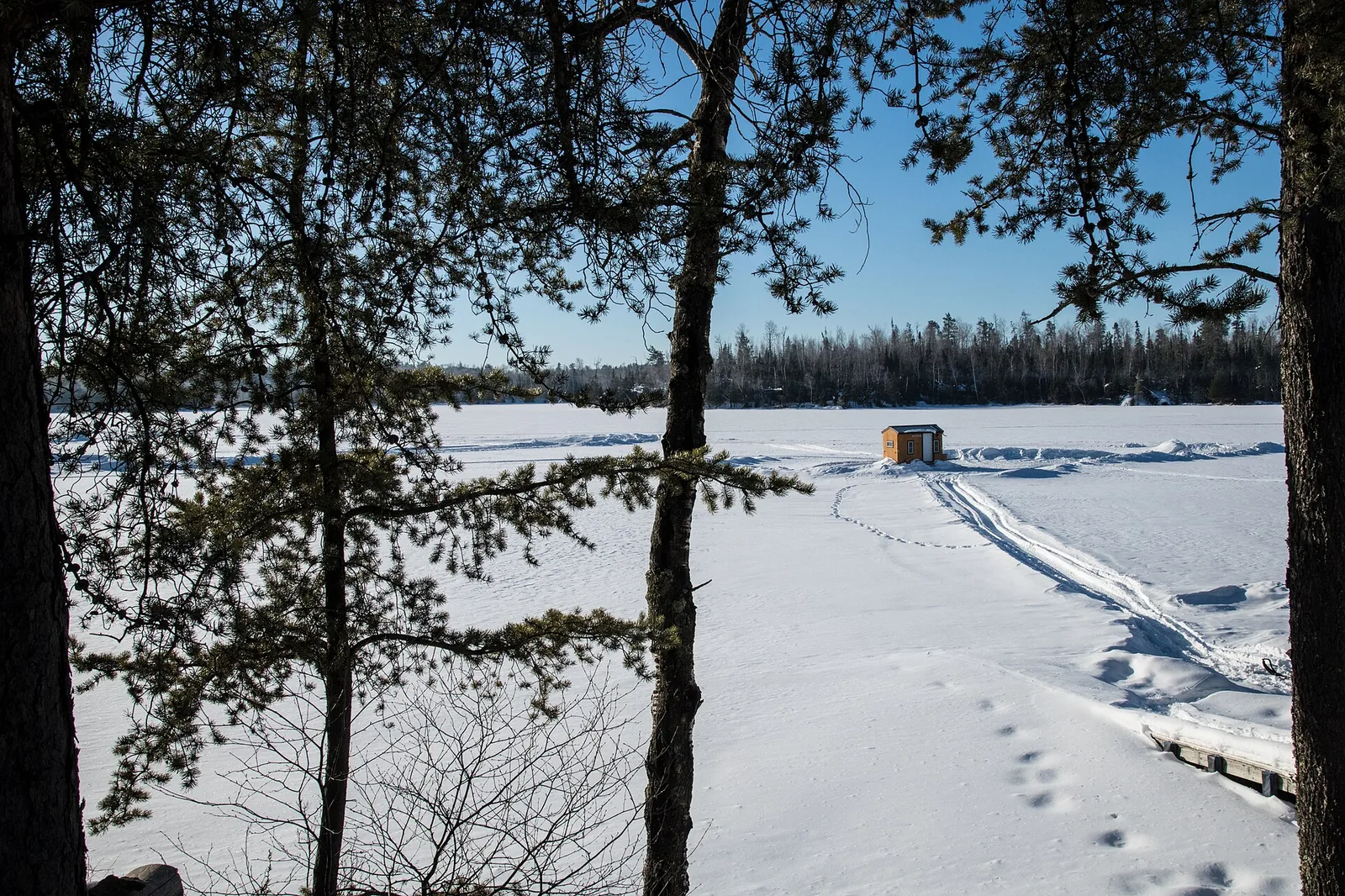 Photo: USDA Forest Service, via Wikimedia Commons · Public domain (U.S. government work)
An ice shack on Shagawa Lake in Superior National Forest on March 2, 2018, well into a settled season. Early-season ice in an El Niño winter may take longer to look like this. Photo: USDA Forest Service, public domain, via Wikimedia Commons.
What to do this week
If you are waiting on Mille Lacs, Leech Lake, Lake of the Woods, or a smaller lake closer to home, treat late November 2026 as a scouting month, not an automatic opener. Ask a local bait shop, watch recent cold nights, and measure the ice yourself every time you move. A strong El Niño raises the chance of a late, shorter, less stable season. It does not tell you how thick the ice is at the next pressure crack.
- Ice Fishing
- Ice Safety
- El Nino
- Minnesota
- Alaska
- First Ice
- Mille Lacs
- Leech Lake
- Lake Of The Woods
- Great Lakes
Questions and answers
- How thick does ice need to be for ice fishing?
- The Minnesota DNR and several other state agencies say 4 inches of new, clear ice is the usual minimum for a person on foot. Many anglers wait for 5 inches. Those figures do not apply to white or slush ice, which is much weaker, and thickness can change a few yards away.
- Is El Niño going to cancel the ice-fishing season?
- No source we checked said lakes would stay open all winter. Minnesota climatologist Pete Boulay told the Grand Forks Herald that past El Niño winters still produced ice, though it may form later and leave earlier. USGS says a warmer winter can shorten the season and make the ice less stable.
- Can I tell if ice is safe just by looking at it?
- No. Officials in Minnesota and in Alaska's Mat-Su Borough say you cannot judge strength by appearance. The reliable method is to drill or chisel a hole and measure, then check again as you go.
- What should I carry on first ice?
- A spud bar or chisel, a tape measure, ice picks you can reach if you fall in, a throwable rope, and a life jacket or float suit. Go with a partner, tell someone your plan, and turn around if the ice is not ready.
Lakes in this story
Sources
- EL NIÑO/SOUTHERN OSCILLATION (ENSO) Diagnostic Discussion (November 12, 2026), NOAA Climate Prediction Center (read Nov 22, 2026)
- General ice thickness guidelines, Minnesota Department of Natural Resources (read Nov 22, 2026)
- Minnesota climatologist says El Niño could impact ice on lakes this winter, Grand Forks Herald (read Nov 22, 2026)
- What El Niño could mean for Minnesota's ice fishing season, FOX 9 Minneapolis-St. Paul (read Nov 22, 2026)
- Regional Super El Niño Impacts: Midwest U.S., U.S. Geological Survey (read Nov 22, 2026)
- How a historic El Niño might spare northern Michigan from a harsh winter, Interlochen Public Radio (read Nov 22, 2026)
- Experts urge caution as warm weather delays ice formation in Mat-Su, Alaska Public Media / Mat-Su Sentinel (read Nov 22, 2026)
- Learn How To Ice Fish (ice safety), New York State Department of Environmental Conservation (read Nov 22, 2026)
- Ice Cover: NOAA Great Lakes Environmental Research Laboratory, NOAA GLERL (read Nov 22, 2026)